
My work exists both comfortably and uncomfortably between artistic and political practices, shaped by the contradictions of my own career journey. I studied theater throughout my life, culminating in a doctorate. I have toured extensively in theater festivals, taught in theater departments, and received several theater awards. Yet I have never created a play for a traditional theater stage with an audience seated in the dark. Instead, I have consistently experimented with audience interaction, often outside institutional spaces.
In Lebanon, I co-founded Dictaphone Group in 2010, driven by a commitment to spatial justice and an interest in creating performance work within contested public spaces. These projects invited audiences to question the politics of space through performance.
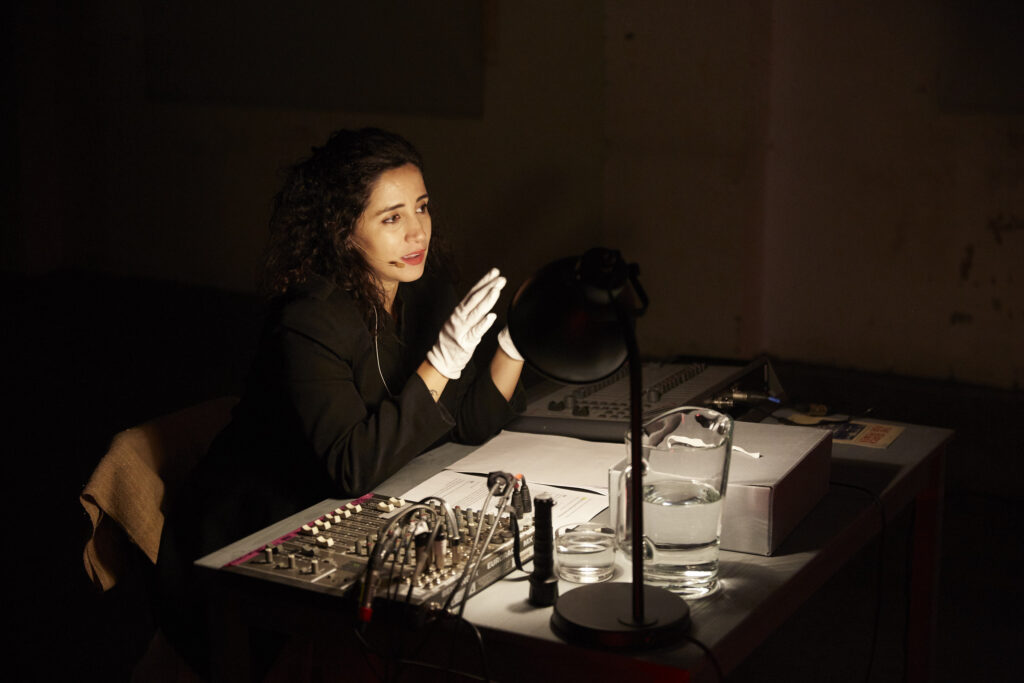
At the core of my practice is liveness—the encounter with the audience. I have never viewed audiences as faceless crowds; they are collaborators and cocreators. At times, they become the sole performers, transforming an installation into a live artwork. Each encounter carries the possibility of a new experience. Audiences can subtly—or radically—shift the work, and the form emerges from the way that encounter is structured. As a result, my projects range from site-specific and lecture performances to one-on-one, interactive sound, and video-based works.
Across all of my work is a sustained interest in borders: internal and external, visible and invisible, embodied and colonial. I am interested in borders within our bodies, cities as borders, the art industry as a border, and national borders as mechanisms through which people are made to disappear.
From September 29 to October 2, we’re thrilled to co-present Tania El Khoury’s As Far As My Fingertips Take Me and Camp Pause at Treaty Space Gallery, in partnership with the Prismatic Arts Festival.
Performance
As Far As My Fingertips Take Me is an encounter through a gallery wall between an audience member and a refugee. Their arms touch without seeing each other. The refugee will mark the audience by drawing on their arm. The audience will listen to those who have recently challenged border discrimination. The marking can be kept or washed away.
Installation
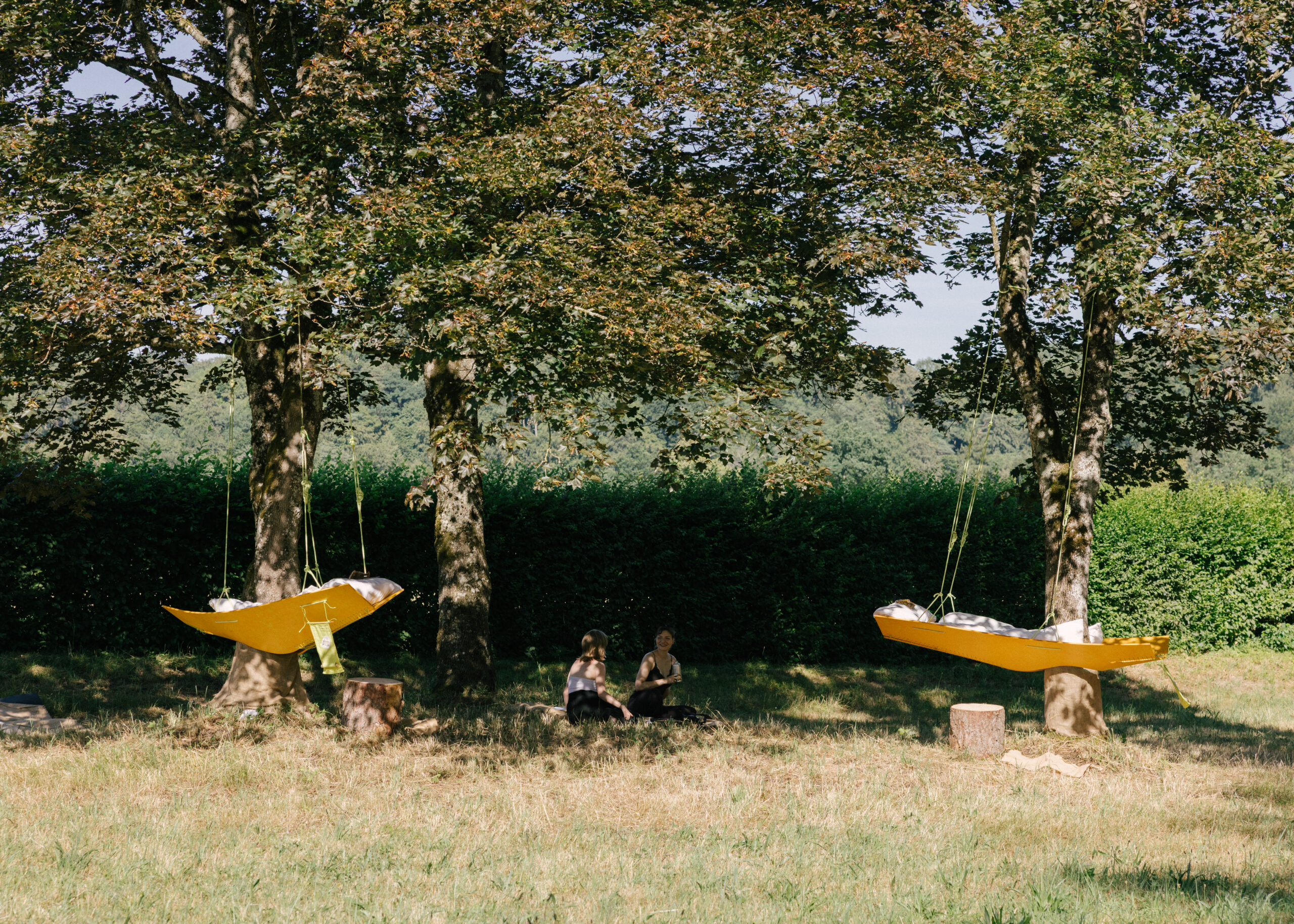
Reflecting on ideas of refuge and the sea that connects them to Palestine, Camp Pause follows four residents of the Rashidieh Refugee Camp located on the coast of Lebanon, just south of the city of Tyre. The residents trace their everyday routes from their homes to the sea