


Fashion designer Xinhao Wang (BFA 2024) was recently featured in the pages of Vogue Runway for his collection of elegant tennis-inspired menswear, developed as a graduation project at London College of Fashion. While Xinhao says he learned more about the fashion industry in his post-graduate work, he credits his time at NSCAD for teaching him to understand the characteristics of fabric and to experiment with textiles as part of the design process.
Xinhao checked in from his latest project to talk more about his time at NSCAD, his latest collection and how his fashion career is evolving.
How did you know you were interested in fashion design?
At first, my interest was influenced by my mother. She loved shopping in Hong Kong, and in China Hong Kong has always been at the forefront of fashion, so I was exposed to many avant-garde and trend-driven designs from a young age. Later, documentaries and runway shows by designers such as Alexander McQueen and John Galliano deeply captivated me. They helped me understand that fashion is not only about making beautiful clothes—it can also communicate an artistic concept, personal beliefs, and storytelling through the runway, bringing the audience into a designer’s imagined world.

How did you choose NSCAD?
I first completed my business degree at Saint Mary’s University in Halifax. During that time, I became friends with many NSCAD students. They really loved the learning environment and encouraged me to apply and pursue my dream. Before applying, I had zero formal background in art, so I also feel very fortunate to have received an offer from NSCAD.
What were the highlights of your time at NSCAD? Can you share some stories about what you learned that helped you later?
There are a few moments that really stayed with me. One was Professor Barbara’s pattern-making and sewing class. The first time I made a garment with my own hands was incredibly rewarding. It was during the pandemic, and our class had only six students, but everyone was fully committed. With Barb’s serious and detailed guidance, we produced strong, distinctive work, and I learned a lot from my classmates as well.
Another highlight was NSCAD’s unique approach that blends textiles and fashion. That model helped me a lot later in graduate school. It taught me not to focus only on “fashion” as an idea, but also to understand fabric characteristics and develop design through textile experimentation—creating work with more personal identity. This aligns closely with the menswear approach at London College of Fashion, where design often begins with fabric.
The biggest highlight was definitely the graduation fashion show—my first show in life. I was truly excited to see real models wearing my garments and presenting them to an audience.
Can you tell me more about your work at London College of Fashion? How did you decide on the theme for your graduating collection, Rotation?
Studying at London College of Fashion was completely different from NSCAD. LCF is much more focused on specialized pathways—menswear, womenswear, knitwear, print, and so on—and the expectations are more professional and commercial. If NSCAD nurtures designers with an artist mindset, LCF feels more like it prepares talent for the fashion industry.
At the beginning, we were asked to start research from a very small object. I’m a tennis lover, so it felt natural for me to choose tennis as my theme. Tennis is not only a sport—it carries deep social culture, fashion history, and identity. Historically, tennis sportswear and fashion have influenced each other. And of course, innovations like Lycra completely changed the appearance and performance of tennis clothing.
Why did you decide to design menswear, specifically for tennis?
Choosing menswear is something I really credit to my undergraduate tutor Tabitha, for her guidance and advice. When I graduated, I was very interested in pattern cutting, but Tabitha believed that becoming a designer would be more challenging and meaningful for my long-term development. She also felt that compared to womenswear, I had stronger talent in menswear. Given my more commercial design style, she strongly encouraged me to continue my studies at more industry-oriented schools such as Parsons or London College of Fashion.
Can you tell me more about how Vogue Runway chose your work to feature? What did that feel like?
The London College of Fashion graduate show includes two parts: a catwalk show and a showroom presentation. Every year, a jury from London Fashion Week selects certain works to be presented on the catwalk, and those selections have the opportunity to be featured on Vogue Runway.
Vogue wrote about my work: “Xinhao Wang explored sportswear sensibilities with exquisite tailoring.” The jury selected my looks because my design presented a complete head-to-toe outfit, combining sports and formalwear in a cohesive way. I felt extremely lucky and excited, because there were so many outstanding collections that year.

What are you working on now? How did your education influence your career so far?
I’m about to join a start-up fashion brand as a designer. I see my education as the foundation that allowed me to enter this industry—it gave me confidence, and it also equipped me with the skills and knowledge needed to begin a professional path.
What are your goals?
My long-term goal is to build a brand with my own design identity. I think that will come after I understand the industry more deeply and gain more experience, resources, and knowledge.
What’s next in your career?
My plan is to work as a designer within established brands first, to build experience not only in design but also in the broader business—supply chain, production, sales, and more—so I can lay a strong foundation for eventually starting my own brand. I also want to learn from and exchange ideas with excellent designers in the industry, to keep expanding my inspiration and perspective.
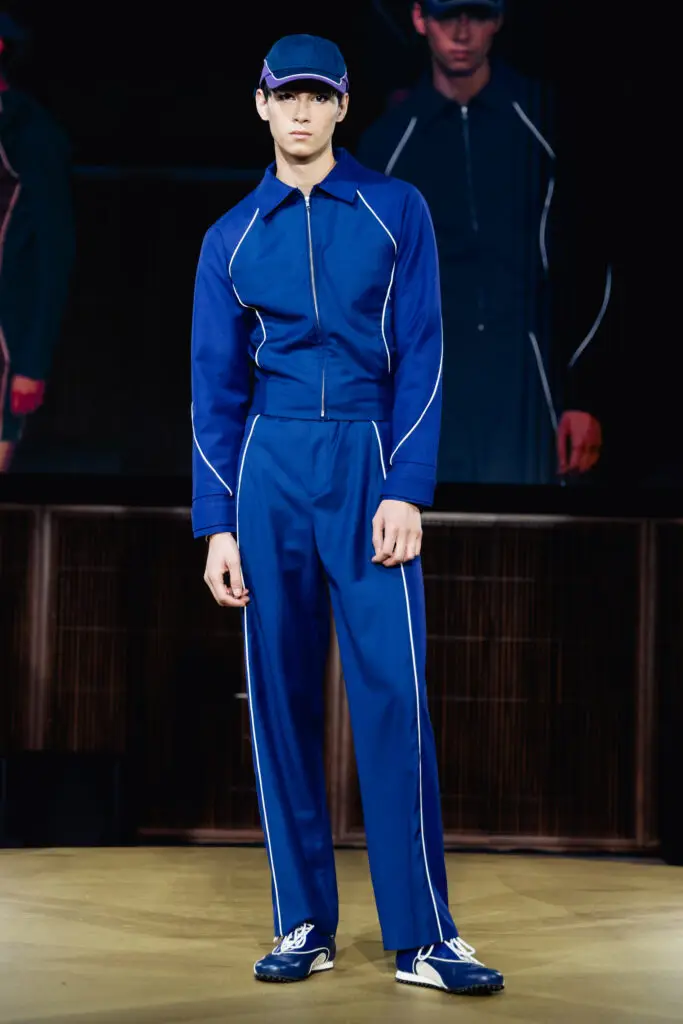
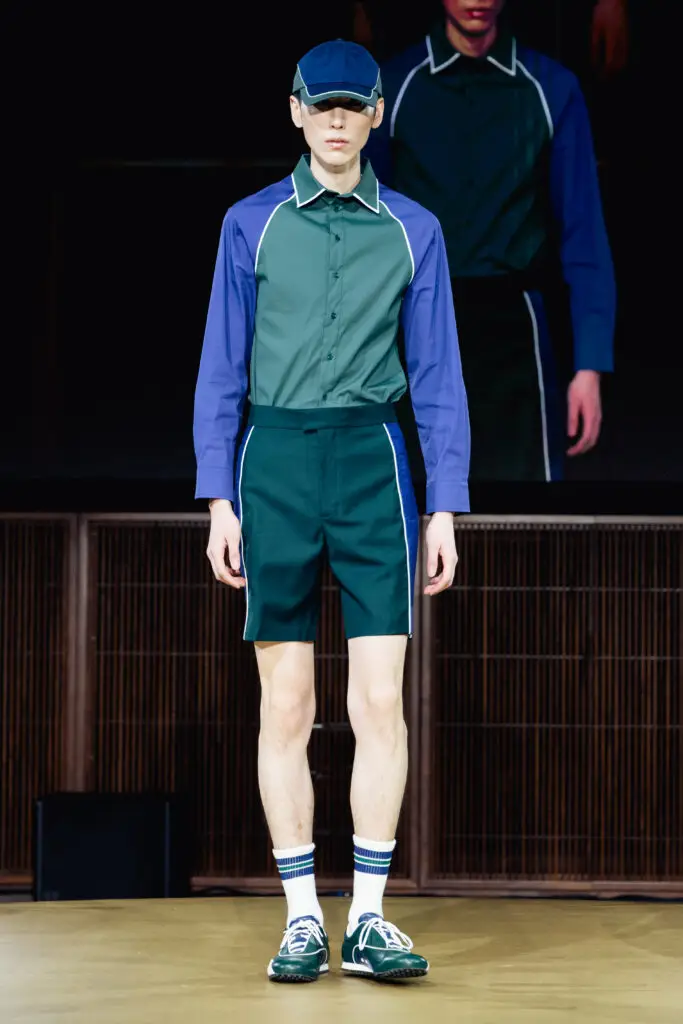
Photos: Courtesy of Xinhao Wang
Do you have any advice for fashion students who are attending NSCAD now?
First, fundamentals are extremely important—pattern-cutting, sewing, and construction. Even at London College of Fashion, we still spend about one-third of our time improving our technical skills in sewing and pattern making. A strong design cannot exist without high-quality construction and a good fit.
Second, NSCAD offers many opportunities to explore art beyond fashion. Don’t limit your vision to clothing only—sculpture, jewelry, and painting can all become powerful sources of fashion inspiration.
Finally, believe in yourself and keep going with determination. I’m deeply grateful to the professional and encouraging teachers I met at NSCAD—Gary, Barb, Tabitha, Jennifer, and others. I wouldn’t have achieved what I have today without their guidance and support.