

The average age of a patient at the Nova Scotia Rehabilitation and Arthritis Centre is 57 years old, and each one manages up to 11 medications daily.
The Centre, a clinic at the QEII hospital, helps patients recover from physical and neurological injuries. Their Self-Medication Program (SMP) teaches a select group of patients how to manage their medications outside of the hospital with the help of printed materials and staff.
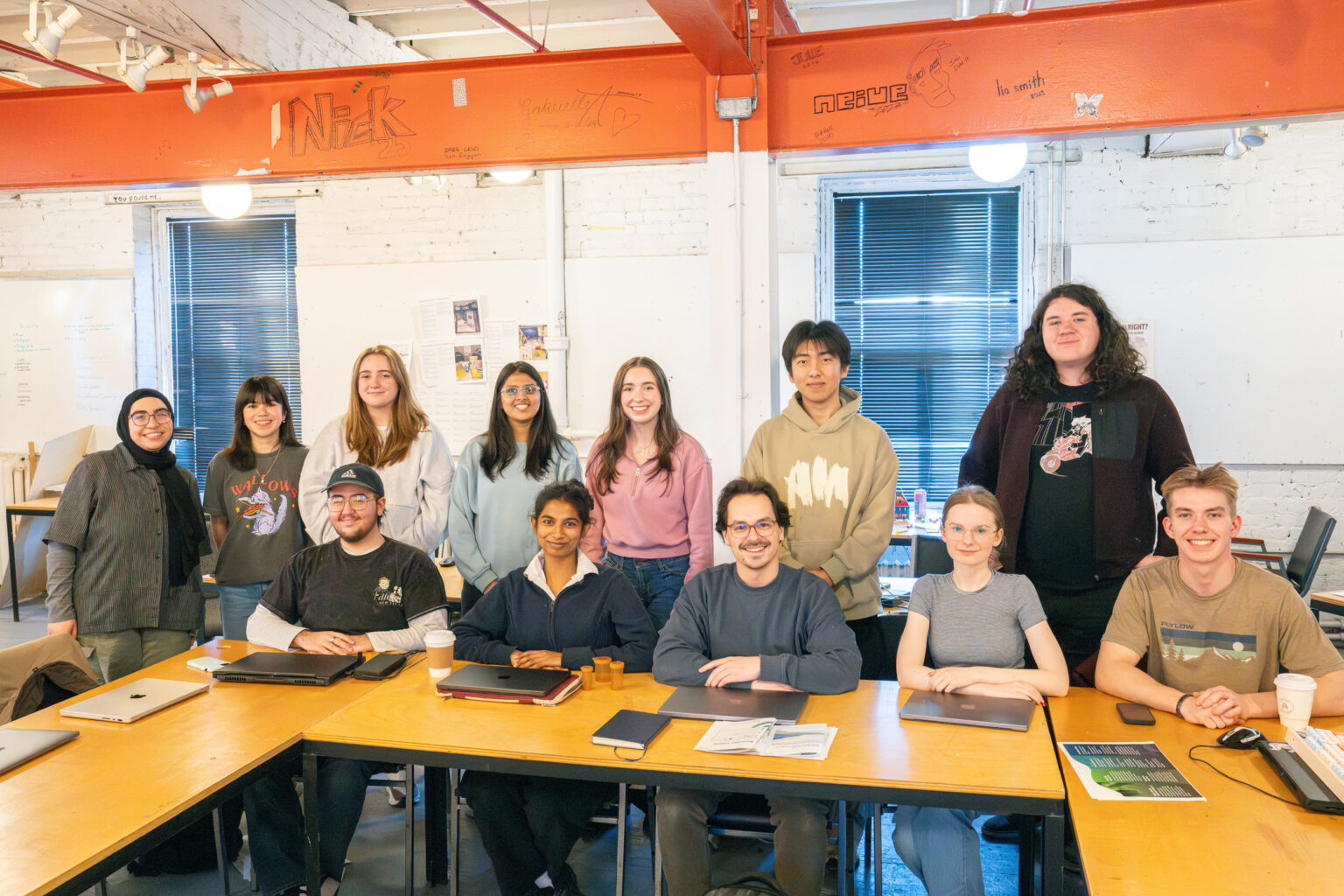
Interdisciplinary Design instructors Roberta Schultz and John deWolf worked with Nova Scotia Health (NS Health) to identify the centre as the focus for their Design Studio class, directing a dozen NSCAD students to improve the existing materials and create new ones for the Self-Medication Program.
Using systems thinking and human-centric design methods
Participants of the program often receive their new care instructions under incredible stress and life changes, says Schultz. “It becomes very overwhelming for the patient. And because it’s the Arthritis Centre we find they have dexterity issues, mobility issues, even cognitive issues. If they’re not feeling well and they might be depressed, they may not care about medicine.”
Schultz and deWolf modelled their work on a human-centric design process—a method that focuses on building empathy for the user by better understanding their perspectives and requirements placing the user at the forefront of the design process.
Divided into four groups, the students developed four distinct approaches to helping patients, to ultimately provide NS Health with novel ways of looking at their own program. New tools include: an additional section on the YourHealthNS app to help track medication intake; a new bespoke app meant to keep patients engaged and motivated throughout the process; a website with learning videos and info sheets; a redesign of pill labels; and a take-home dossier of information on the program.
“We also use systems thinking, a methodology that is focused on the complexity of systems,” says Schultz. “It’s important for the students to have the big picture of what’s going on. How does it impact nurses, pharmacists, caregivers at home? We’re focusing on the patients, but also on the repercussions on the systems within NS Health and beyond.”
‘From day one, students were engaged’
This work comes on the heels of Design Studio’s 2024’s Colon Cancer Prevention Program, which saw their students re-evaluating NS Health’s home screening kits.
“Medication is a relatable topic. From day one, students were engaged from the get-go. That’s the coolest part: as they start progressing and doing their research and experimenting with ideas, they fall in love with the project. You can just tell. They get really invested.”
“We got a lot of the nurses’ side of the story which was very relatable: ‘The workload is hard, we would like to make things that help with that,’” says Hannah Guenther, a third-year Interdisciplinary Design student. “We realized to make the nurses’ work easier is to help the patients in the first place because then they don’t have to rely on the nurses so much. It’s helped inform the more nuanced problems that aren’t visible on a piece of paper right away.”
Presenting to health care professionals December 12
The students will present the project to health care professionals at the Nova Scotia Health Innovation Hub on December 12. It’s an academic exercise—meaning this isn’t a pitch meeting where their ideas will be purchased and implemented—but it’s a vital part of the student’s learning experience, and an opportunity for NS Health to see their products through a new lens based on principles of design, accessibility, and human factors.
Based on last year’s presentation, Schultz expects a warm reception from their various clients at the clinic.
“They’re so in the weeds and extremely busy day-to-day tasks. Our progress meetings, where we shared our research and insights, often left them excited to see more,” says Schultz. “They reacted positively to the students’ work and are eager to see the final presentations and share the results with their colleagues at NS Health, in the program and beyond.”
Learn more about NSCAD’s Bachelor of Interdisciplinary Design program.