

When most people think of design, they imagine sleek technology, trend-hopping concepts, or innovative objects meant to simplify modern life. But at NSCAD University, students in the Studio 5 – Collaborative Design class were given a very different challenge: use design to restore dignity, independence, and connection for people living with dementia.
Led by Associate Professor Glen Hougan, the project asked students to look at the traditional dementia kits that are available—often limited to puzzles, picture books or memory games—and rethink what support could look like.
“Health issues like Parkinson’s and dementia present a great design opportunity for students,” said Hougan. “I had always looked at these dementia kits as something really interesting that students could approach.”
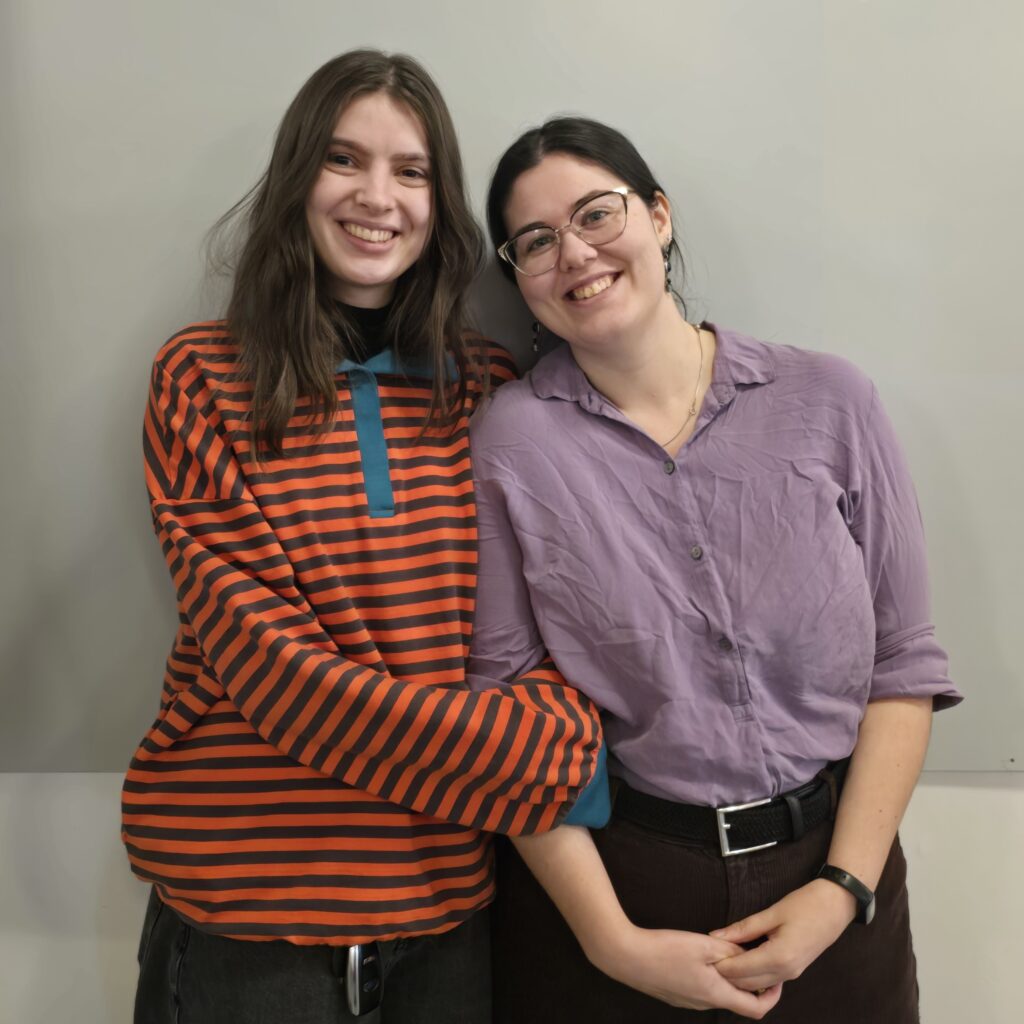
Fourth-year design student, Rose Peddle had to analyze common dementia kits as part of the assignment and felt like the traditional kits infantilize the patients.
“Some were labeled as being for ‘people with dementia and children,’ and that immediately raised a question: Why are we treating adults who have lived full lives as if they are children?” she said. “It’s a way of treating them with respect and dignity and hopefully preserving their independence as long as possible.”
According to the Alzheimer Society of Canada, about 771,939 people in Canada are living with dementia; that number is expected to rise to nearly 1 million people by 2030. As the number of people living with dementia continues to grow, so does the need for creative and human-centered solutions.
In October, the class visited Northwood—a continuing care residence in the city—where students spent the day participating in the daily programming alongside clients living with different stages of dementia to get an in-depth understanding of the disease.
For many students, this was their first time interacting with people living with dementia.
“I was nervous going in because I wasn’t sure how I should talk, or how much I’d have to adapt, but once we were there, we realized they’re just people,” said fellow student Rachel Ladd. “We were doing Tai Chi and I was having a hard time following along. One of the attendees of the program was also having a hard time following it, so we kind of just went off into the corner, making up our own moves and laughing. For me, it informed a lot of what I put into my part of the project; that it’s not about the activities, it’s about having fun with each other or having fun with yourself that’s really important.”
Hougan felt it was important for the project that students talk to real people who are living with the disease rather than rely solely on the internet for their research.
“I think the lived experience of being there, feeling it and being in the environment will position them better for the future,” he said. “Because if we’re looking at a human-centered or user-centered design, and you’re not actually interacting with a real user, it’ll be challenging. Design is face-to-face, design is a contact sport.”
After the research phase, the class split into two design teams, each pursuing a different interpretation of a dementia-friendly care kit.
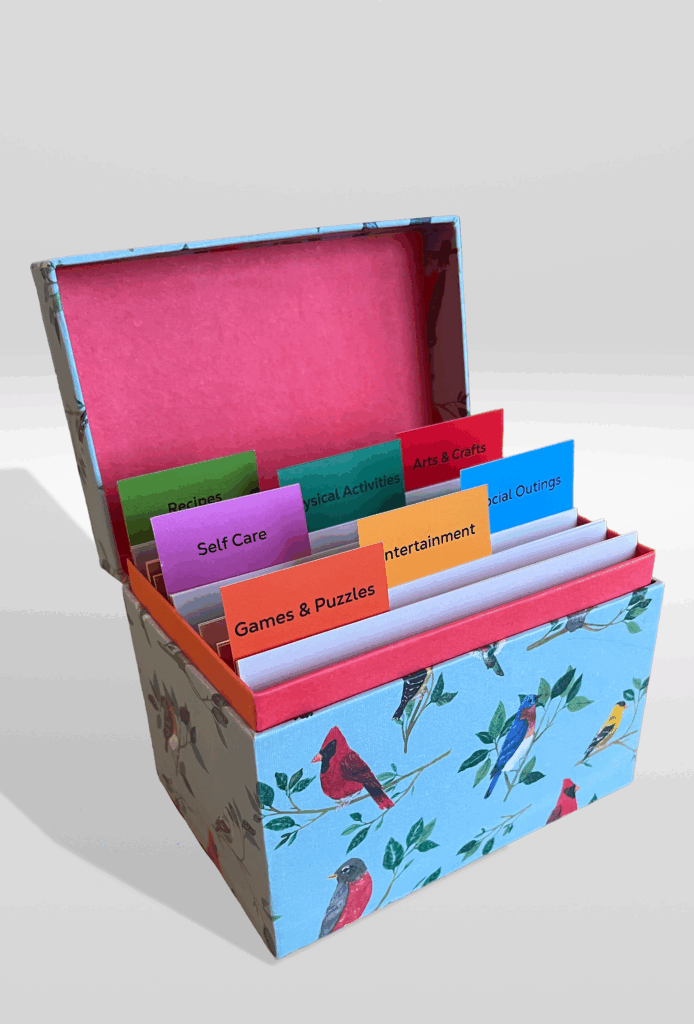
Rachel’s group developed a recipe-style activity card system that includes categories like exercise, arts and crafts, recipes, self-care, and social outings. Each card uses simple, accessible layouts, space for notes, time estimates, and adaptation tips for fluctuating energy or mobility levels.
“We designed it to try and accommodate as many stages of dementia as possible,” she said. So, we use simpler language and more informative cues, and there’s space on the cards to write notes and suggestions on how to personalize the activities. We wanted to make something that encourages them to live independently.”
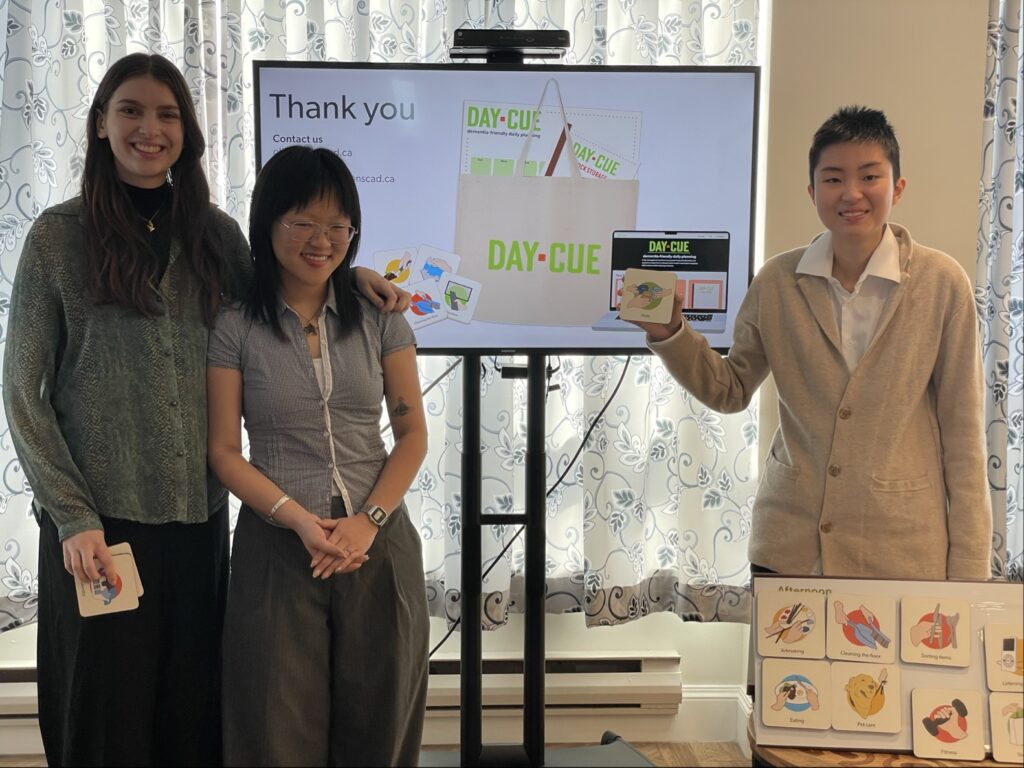
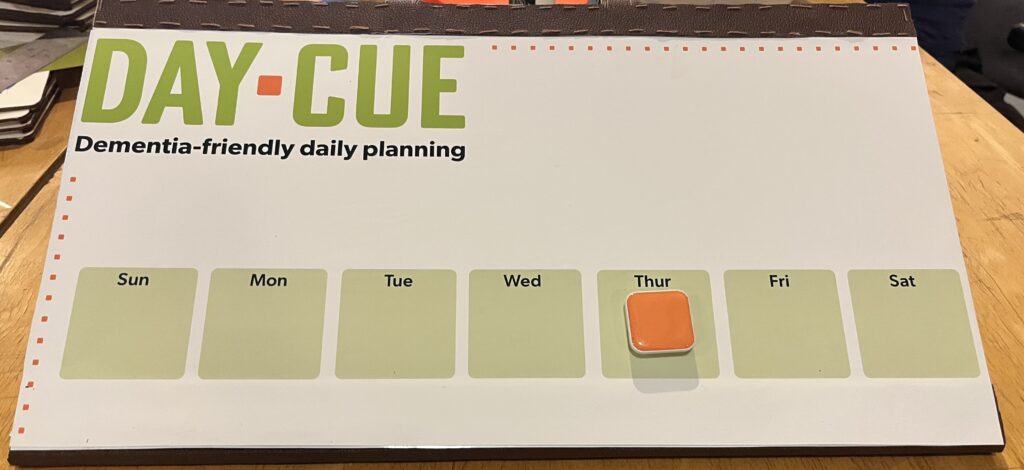
Rose’s team developed an interactive calendar system called ‘Day Cue’: a colour-coded visual cue and day planner with removable, customizable magnetic activity blocks.
“The product we’re trying to design is able to grow with the person’s dementia but also support them through those stages,” Rose explained. “Early on, they can write their own steps, like how they prefer to do laundry, or when they watch their favourite TV show, and so on. In the later stage of the disease, when communicating verbally becomes harder, they can just give their caretaker the activity block they want to do, and those visual cues can help them both maintain familiar routines.”
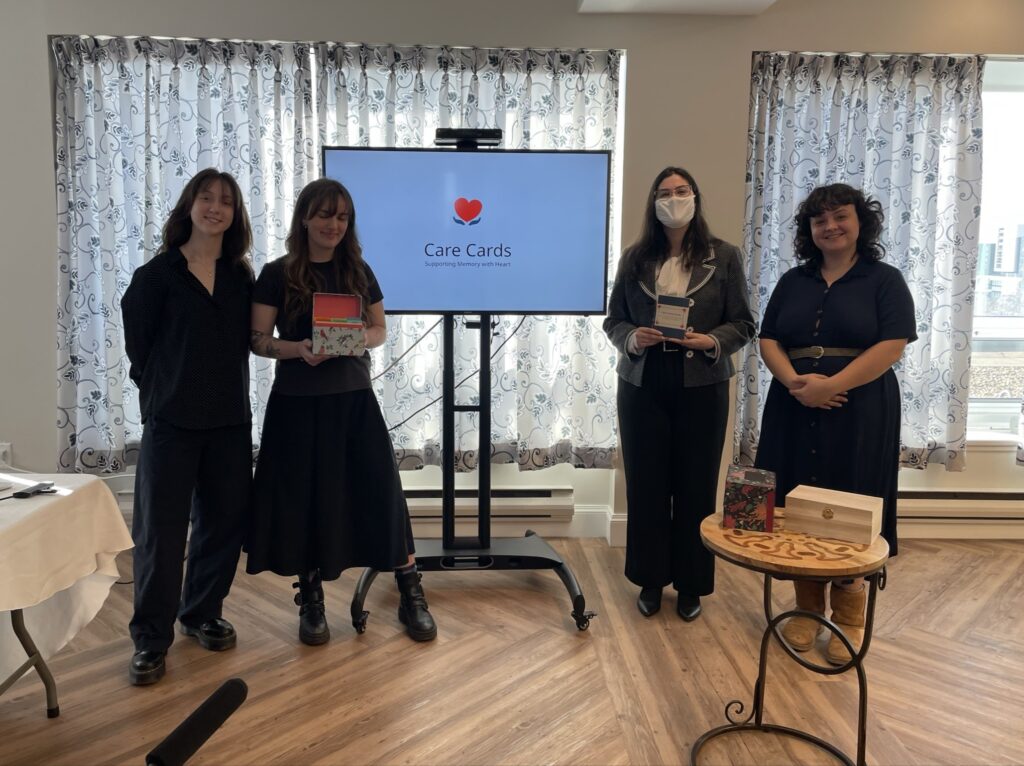
As part of their final project, the two teams had to present their prototype at Northwood (Halifax Campus) on Thursday, December 11, at 11 a.m. The audience included people living with dementia, representatives from the Alzheimer Society of Nova Scotia, and the wider NSCAD Community.
While grades are important for any academic presentation, both teams are more focused on how their work will be received by the community.
“We’d love to spark ideas or even contribute to something Northwood continues to develop,” said Rose. “They’re the experts and we’re the designers asking how design can support the work they already do.”
“What we hope is that Northwood sees potential in this,” Rachel said. “That this becomes something worth developing further, get funding, and go out and help people in our community.”
Samantha Morrison, the Dementia Friendly Communities Lead at Alzheimer Society of Nova Scotia, attended the presentation and loved the amount of work that went into preserving the integrity of the patient.
“I was really impressed by how much thought they put into the personhood of people living with dementia,” she said. “My grandfather had Lewy Body Dementia and a kit like this would have been extremely helpful in navigating and maintaining that relationship with him as he lived with the condition.”
Marco Redden, Research and Evaluation Lead at the Alzheimer’s Society of Nova Scotia, was particularly impressed to see young, emerging designers come up with solutions that impact several generations ahead of them.
“It’s so exciting to see younger people and students thinking about the future in that way,” he said. “When thinking about the needs of seniors and people living with dementia, there’s so much need in this area. So, any sort of opportunities for students to really look in—not just think about the financial incentives—but to really look at that person-centered design in a more holistic way that is going to be useful to people as they age and as they live with different disabilities is a really exciting and heartening thing to see.”
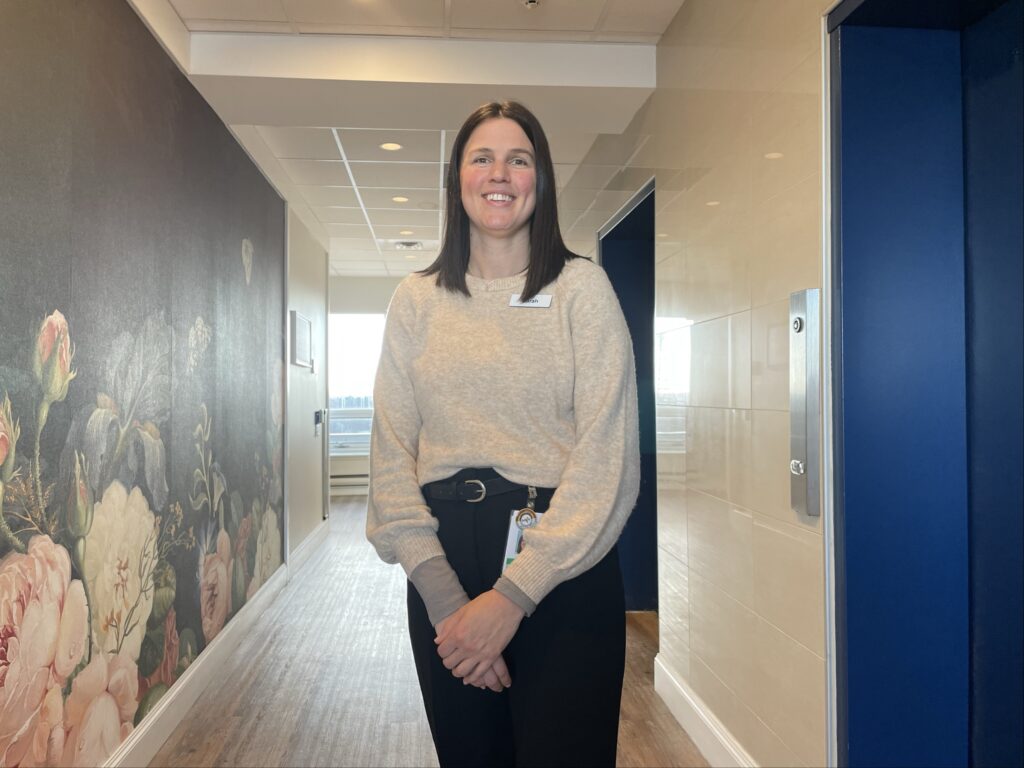
Sarah Cluett, Manager of the Day Program at Northwood, said the presentation left her feeling “hopeful” about the future of dementia care and support for caregivers.
“Any tools, tips or strategies that we can give caregivers and the person living with dementia to support them to live at home and maintain that independence is beneficial,” she explained. “Caregiving is difficult. We say it’s not a 24-hour job; it’s a 36-hour job. So, if we can give them tools to support them and reduce stress, but maintain that independence for the person living with dementia, that would help a lot.”
For Hougan, this project reinforces a critical lesson he teaches in all of his classes: that design is not always about shiny new things but more about things that are meaningful to people’s lives.
“It’s about understanding that everything is human-centered and is built around people’s experiences—not your assumptions of their experiences—but what their experiences are,” he said. “So, you have to have empathy, and you have to really understand your assumptions and perceptions as you go in. Thinking about that and also doing the research is the key you need to understanding the problem.”
Cluett is looking forward to future collaborations between Northwood and NSCAD, especially if it can help their residents live longer, fuller lives.
“At Northwood, we are experts in this area of continuing care. So, to collaborate with NSCAD students—who are experts in design—is a perfect kind of partnership,” she explained. “We are really excited about this project and we’re going to make sure it is getting in the hands of people who need it in the province.”
Learn more about NSCAD’s Bachelor of Interdisciplinary Design program.