Resourcefulness, makeshift objects, and imagining out of reach places
Originally from Karelia, an area of northern Finland that was annexed by Russia during the Winter War of 1939, Kajander’s grandmother fled to Canada during the late 1950s, unable to return home. As part of their research, Kwon and Kajander originally planned to travel along the border between Finland and Russia, but the increased military presence due to Russia’s invasion of Ukraine made this an untenable plan.
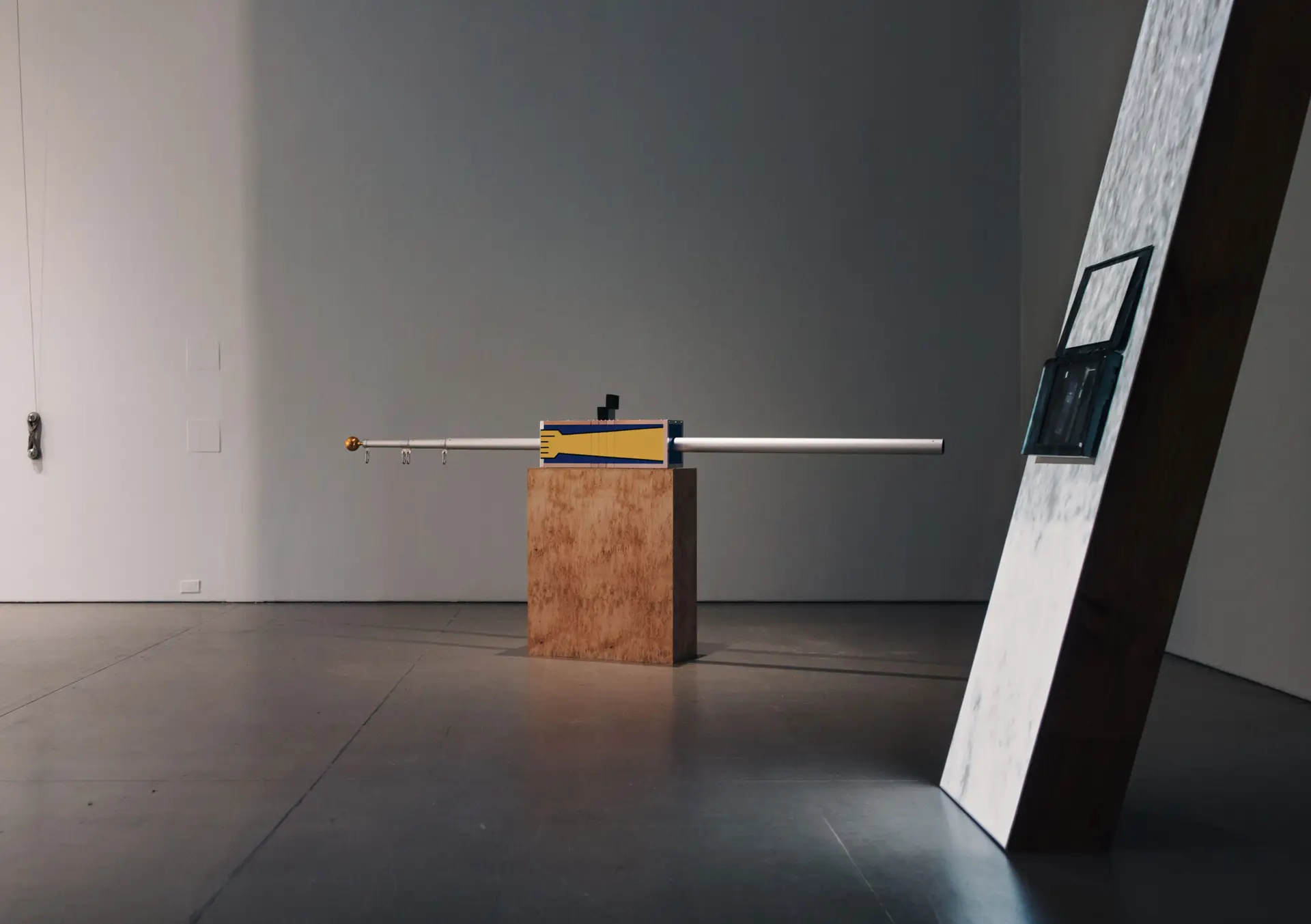
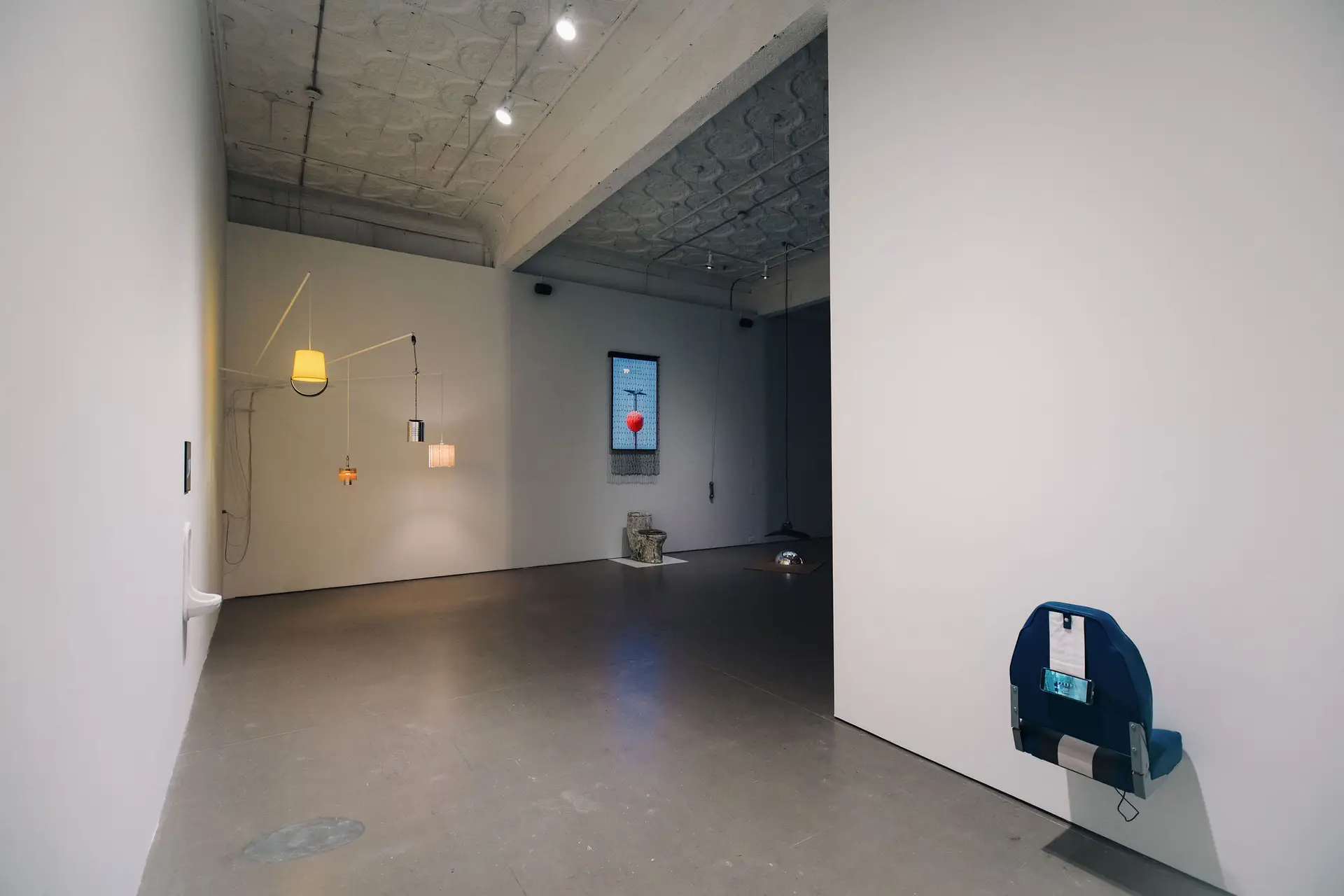
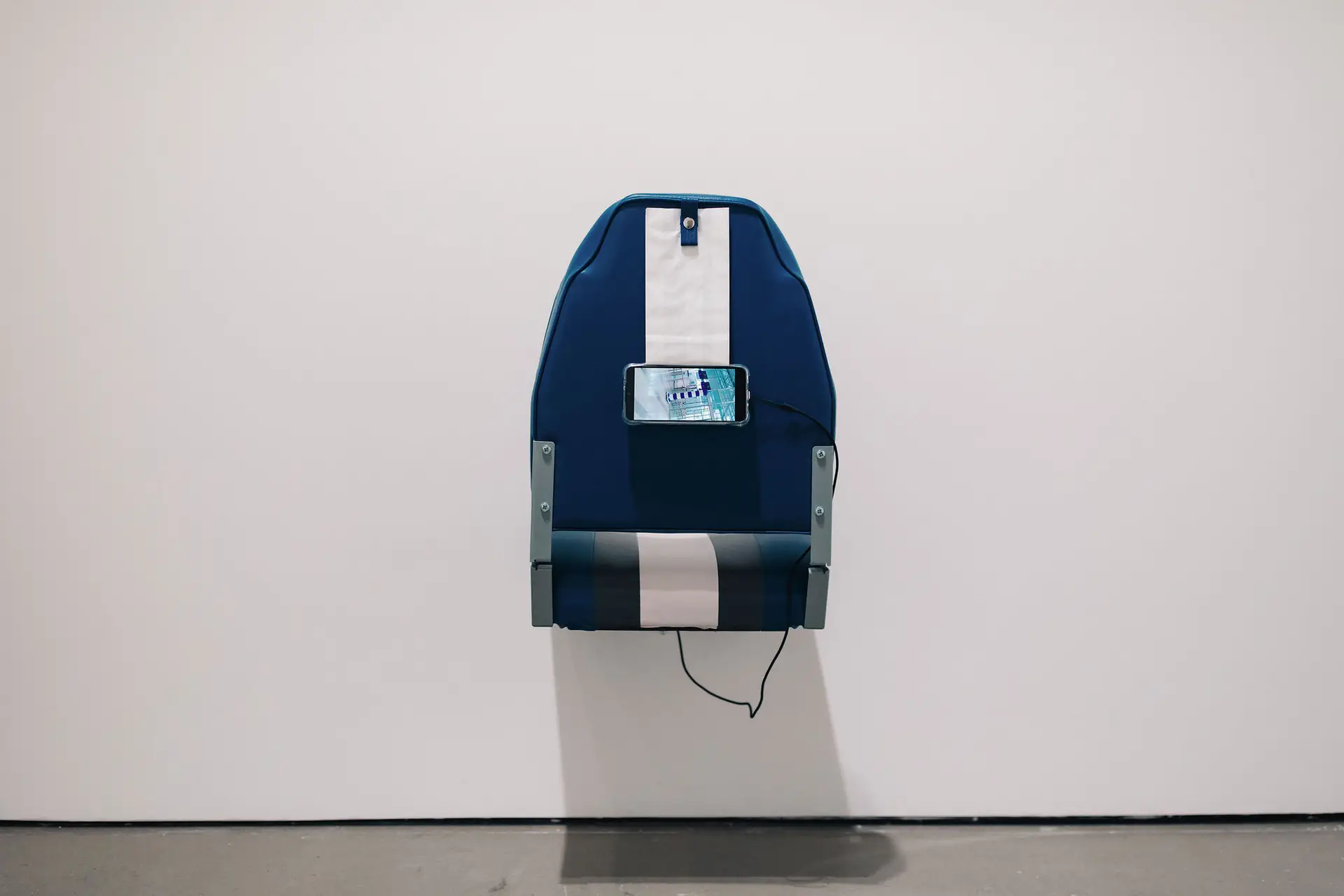
Adjacent to the painted ceiling, a consumer boat seat is mounted face-forward on the wall, mimicking the back of an airplane seat while serving as a frame for a looping cellphone video. If resourcefulness is part of HaeAhn Paul Kwon Kajander’s ethos, makeshift objects are often their output. The cellphone is held up at the seat’s centre with an air-sickness bag, inspired by a clever teenager the duo observed on a flight, tucking their phone case into a bag on the back of the seat to create a hands-free screen to watch videos.
Although both pieces celebrate ingenuity, a natural tension comes into play between technology and the human hand. “This relationship between the hand-painted ceiling and this airplane-seat situ sculpture sets the tone for the exhibition, as they come in to clash with each other,” says Kwon.
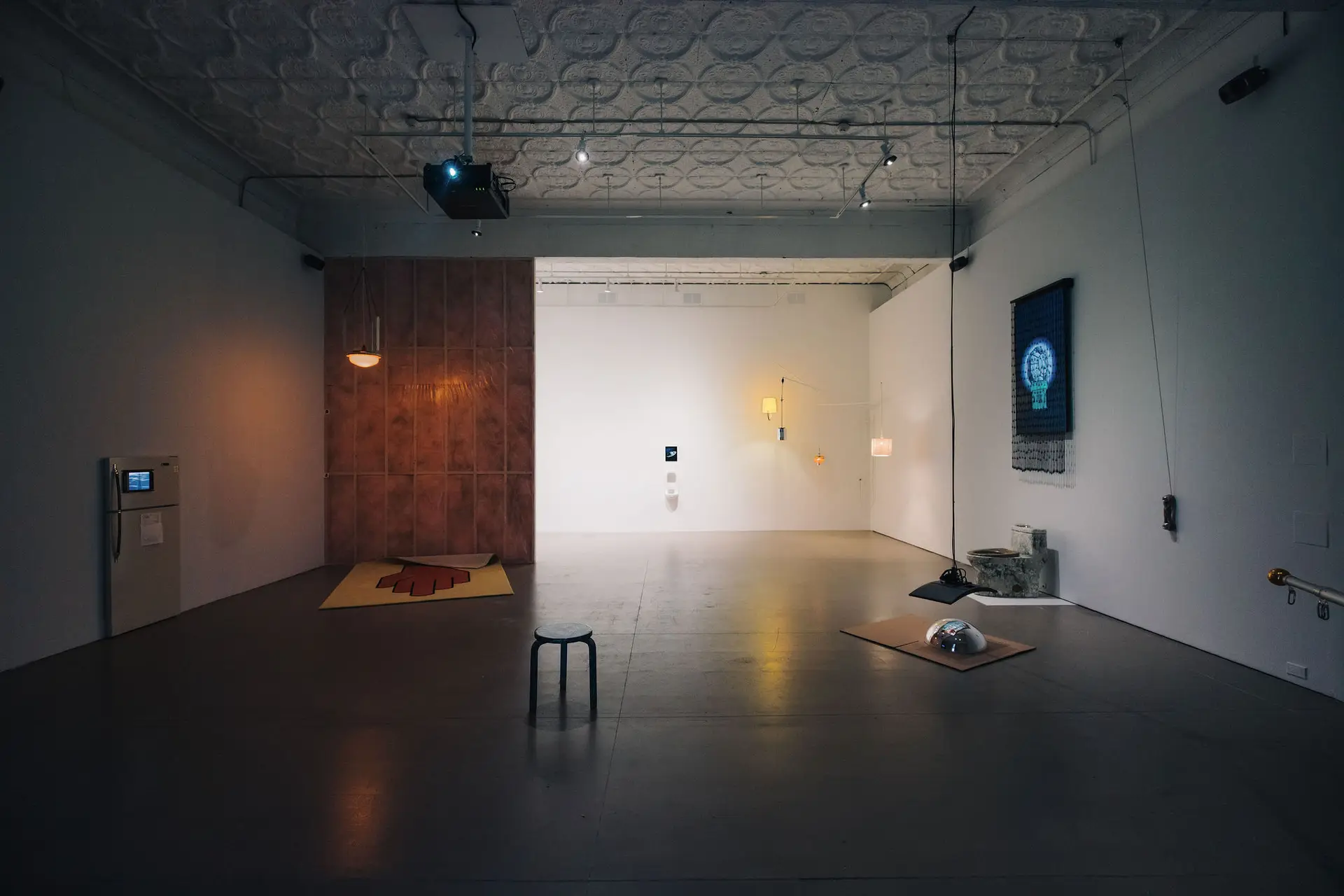
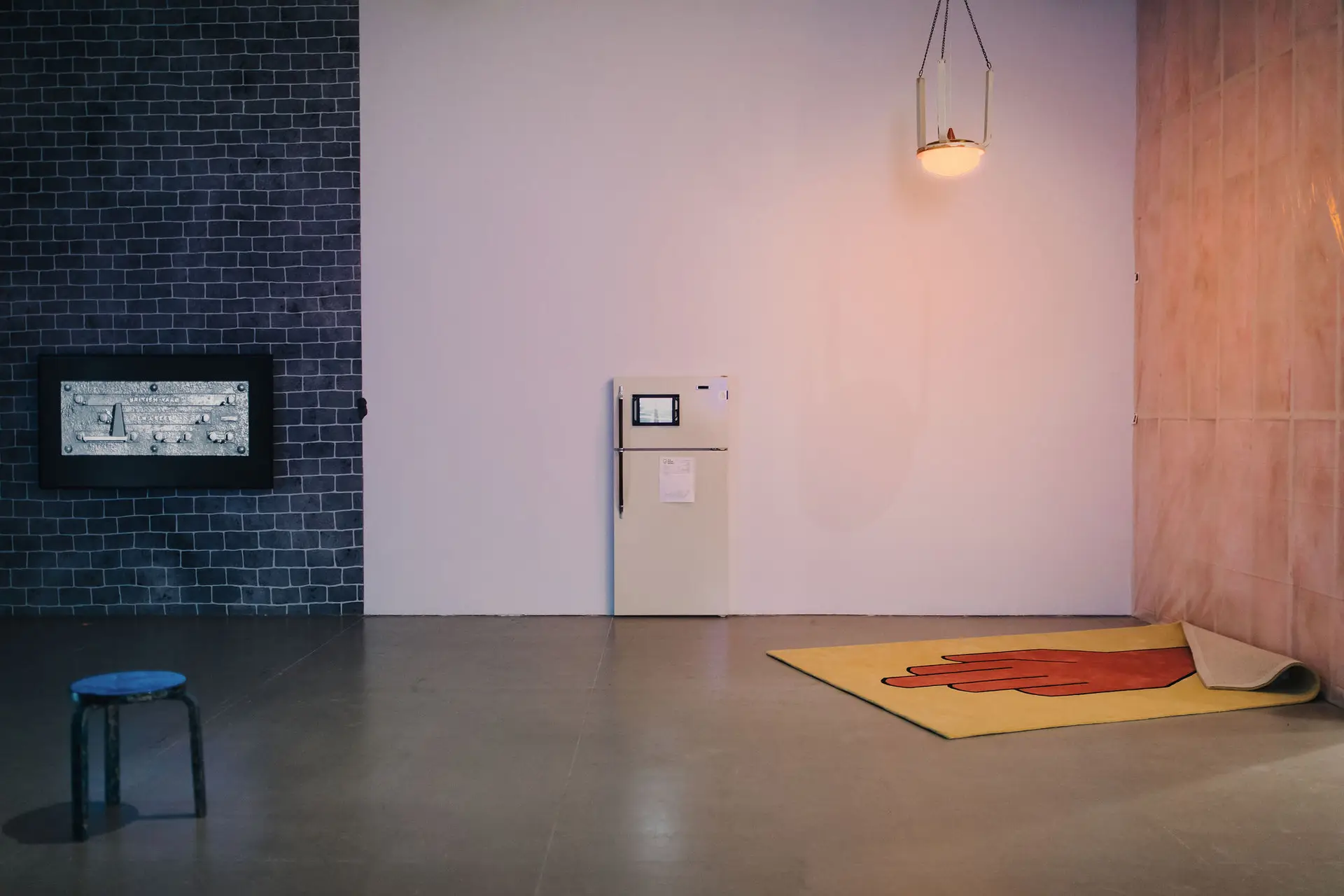
The looping video focuses on a striped obelisk marking the Finnish border at the Helsinki airport. These markers—a white-and-blue striped pattern to indicate the Finnish side, facing off against a magenta-green stripe for Russia—dot the border along the natural landscape, but this symbolic entry point was the only one Kwon and Kajander were able to safely visit in person. Although they had to change their travel plans, the duo uses physical materials throughout the show to imagine places beyond their reach. Sometimes it’s to reminisce—like the refrigerator door that serves as another unique video frame but also as a cultural reminder of home and food.
Many modes of production and NSCAD connections
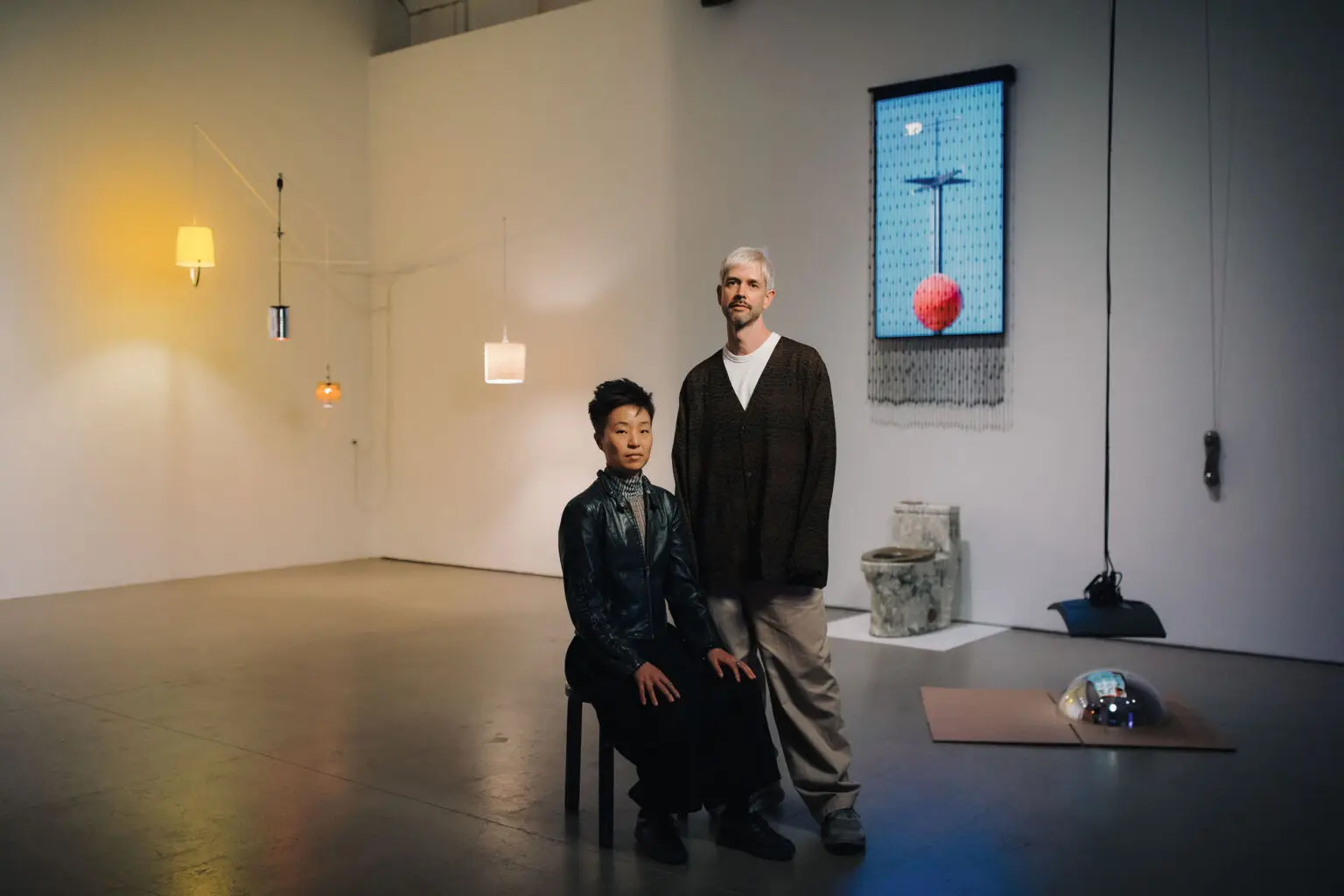
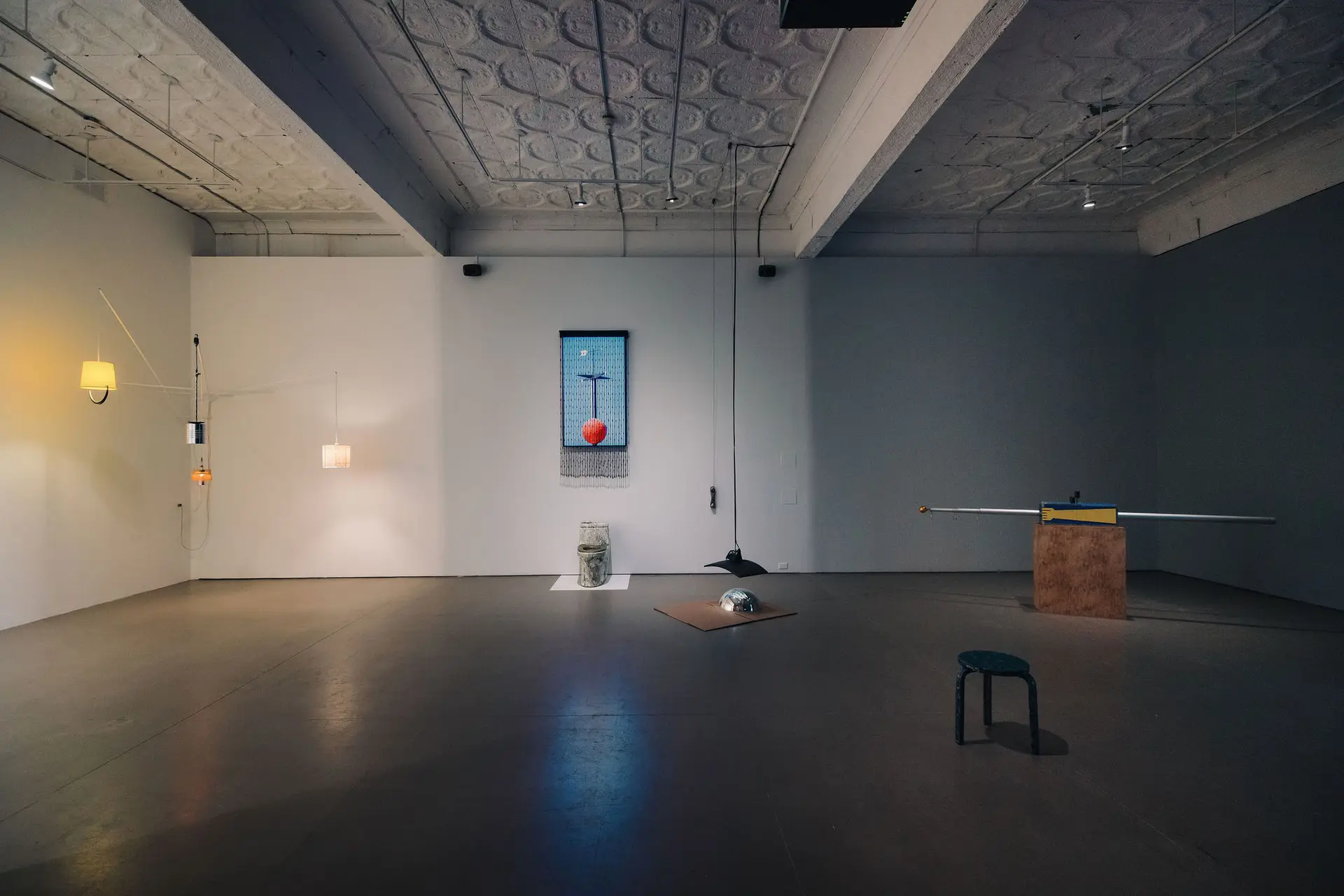
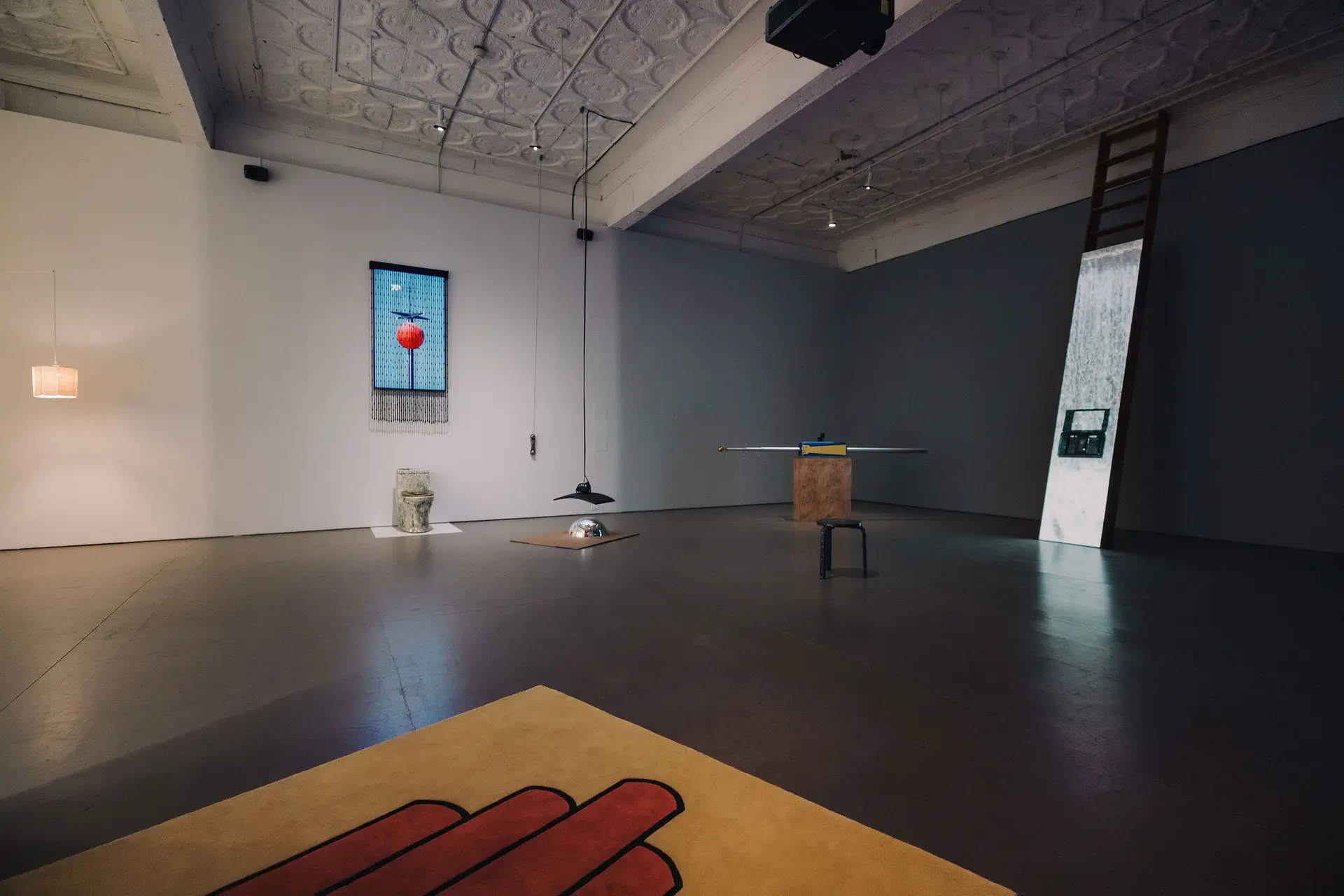
How is Where You Are also displays the breadth of HaeAhn Paul Kwon Kajander’s practice and their many modes of production, as well as their connections to the NSCAD community. Kwon points out a graphic yellow rug with a giant red hand motif, custom-produced by a textile mill, that takes a halt sign from the Finland-Russia border and transforms it to something more welcoming. A stool was beautifully retrofitted with an orange glass dome found in Helsinki achieved through precise cuts made with help from Mark Whidden, an artist and technician at NSCAD’s wood shop.
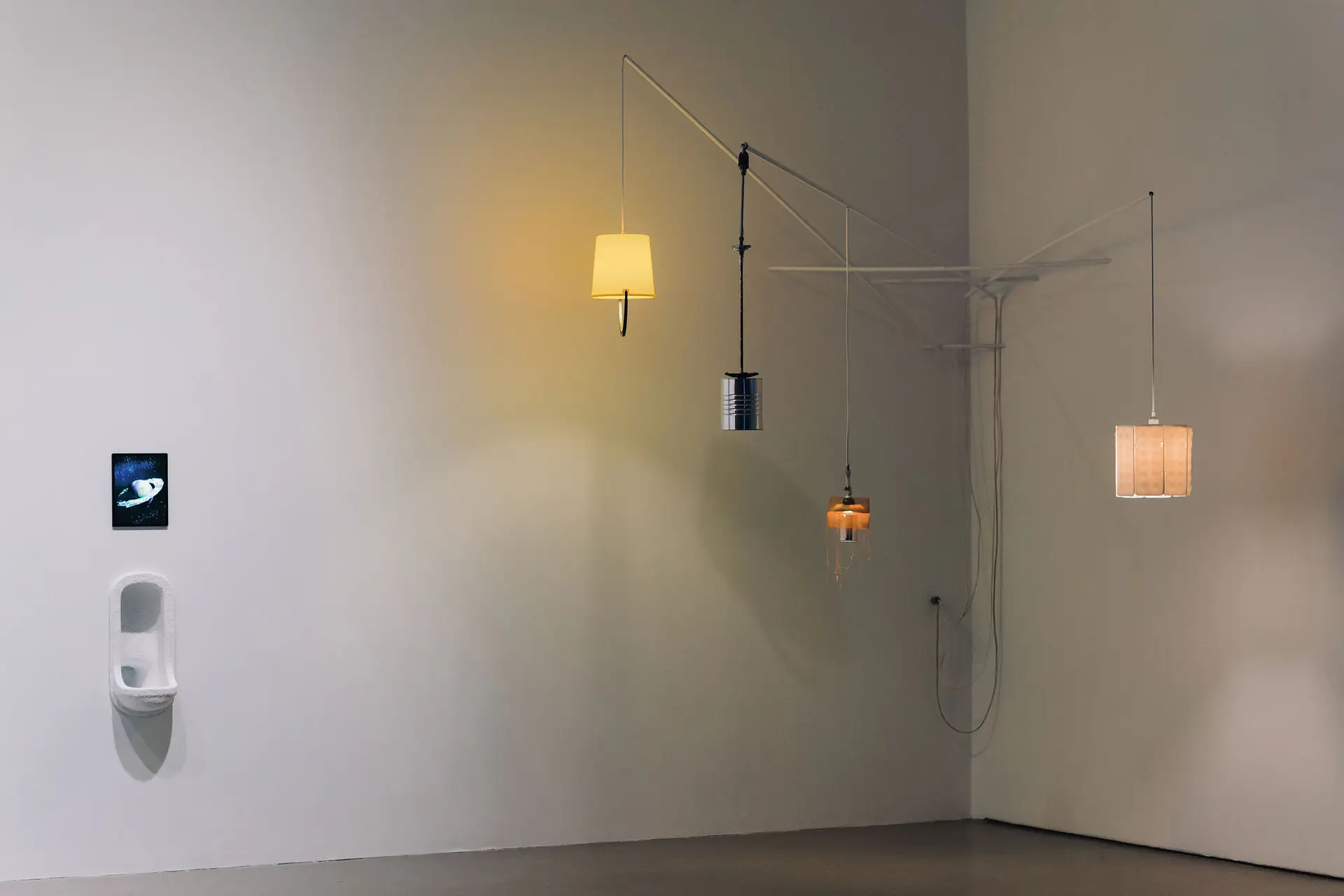
The show includes two toilets; one of which is a Western seating toilet glazed in muddy marbled patterns and, the other, a squat toilet from East Asia, which hangs on the wall like a urinal or a weird tchotchke shelf, reglazed at NSCAD with assistance from ceramicist and technician George Jae Hyun Cho. In between, a clustered lighting fixture inspired by Scandinavian design pioneers Alvar and Aino Aalto is created from coffee cans and vintage lights. One of the lamps was constructed with help from MFA grad and ceramicist Gracia Isabel Gomez Cantoya, who put her expertise with porcelain to great use for what looks as light as air but is deceivingly heavy.
“It took a lot of trial and error to make this. It’s also interesting to us that a designer or architect often does solicit the services of an expert fabricator, but in some of the gestures we wanted to bring into the show, we really felt it was important to figure it out by trying it out ourselves, working through the materials, and seeing what was possible in them,” says Kajander.
In talking about their many trials and way of working, Kajander refers to Intimacies, a 2008 book of philosophy and literary criticism by intellectuals Adam Phillips and Leo Bersani, which ruminates on human intimacy and relationships.
“They talk about their process of writing a chapter, sending it to each other, how they’re writing a response, and just building the text that way,” Kajander says. “We’re ‘working it out by trying it out.’”
“When we read that sentence, we were like, ‘Oh, that perfectly articulates what we do,” nods Kwon in agreement.
HaeAhn Paul Kwon Kajander’s show, How is Where You Are, is on at Mercer Union in Toronto until January 17, 2026