

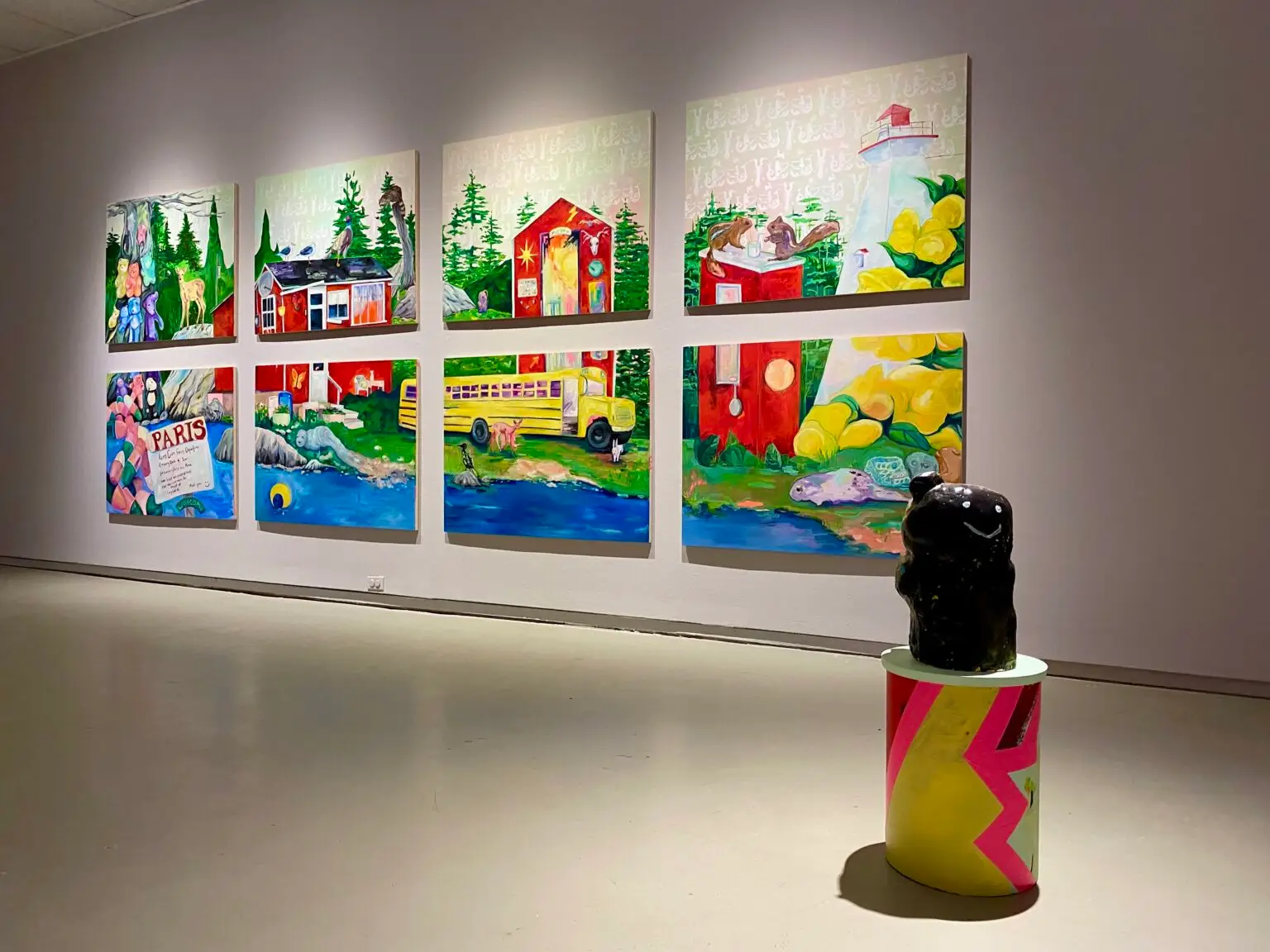
A pair of NSCAD profs is celebrating the matriarchy in an exhibition at the Saint Mary’s University Art Gallery.
What A Sin, which opened to a packed house on January 23, features the work of Craft division professors Ali Nickerson and Leesa Hamilton.
Nickerson presents a variety of media including interactive soft sculptures, drawings, banners, and paintings, while Hamilton offers quilted soft structures and banners. Together their work creates a colourful, thoughtful, interactive immersion into women’s labour in its myriad forms, without judgment.
“We started leaning into this idea of a feminist cult,” says Nickerson. “When you walk into the gallery, you’re met with banners and seating, an invitation to sit, reflect, and ‘pray’ to the feminist before us, thanking them for everything they’ve given us.”
The pair knew each other a little as colleagues, but after Nickerson saw an exhibition of Hamilton’s at the Anna Leonowens, she invited her to join the Saint Mary’s show. A partnership quickly formed, each artist both responding to one another’s pieces, and creating collaboratively.
“We explore similar themes, we have an aesthetic that works together, but is really different,” says Hamilton. “Ali’s work is really free and playful and round, and I play within the lines. I love a grid.”
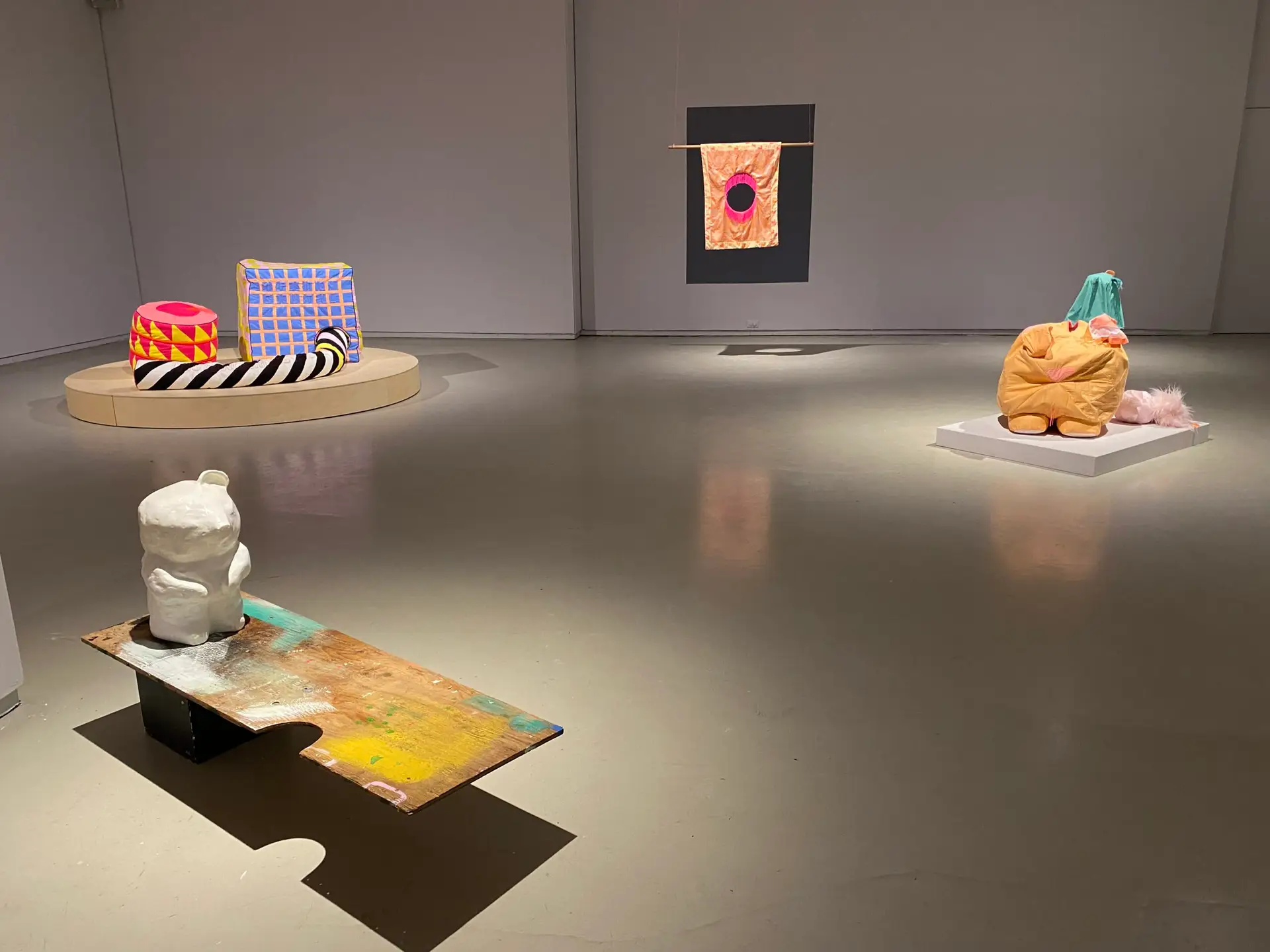
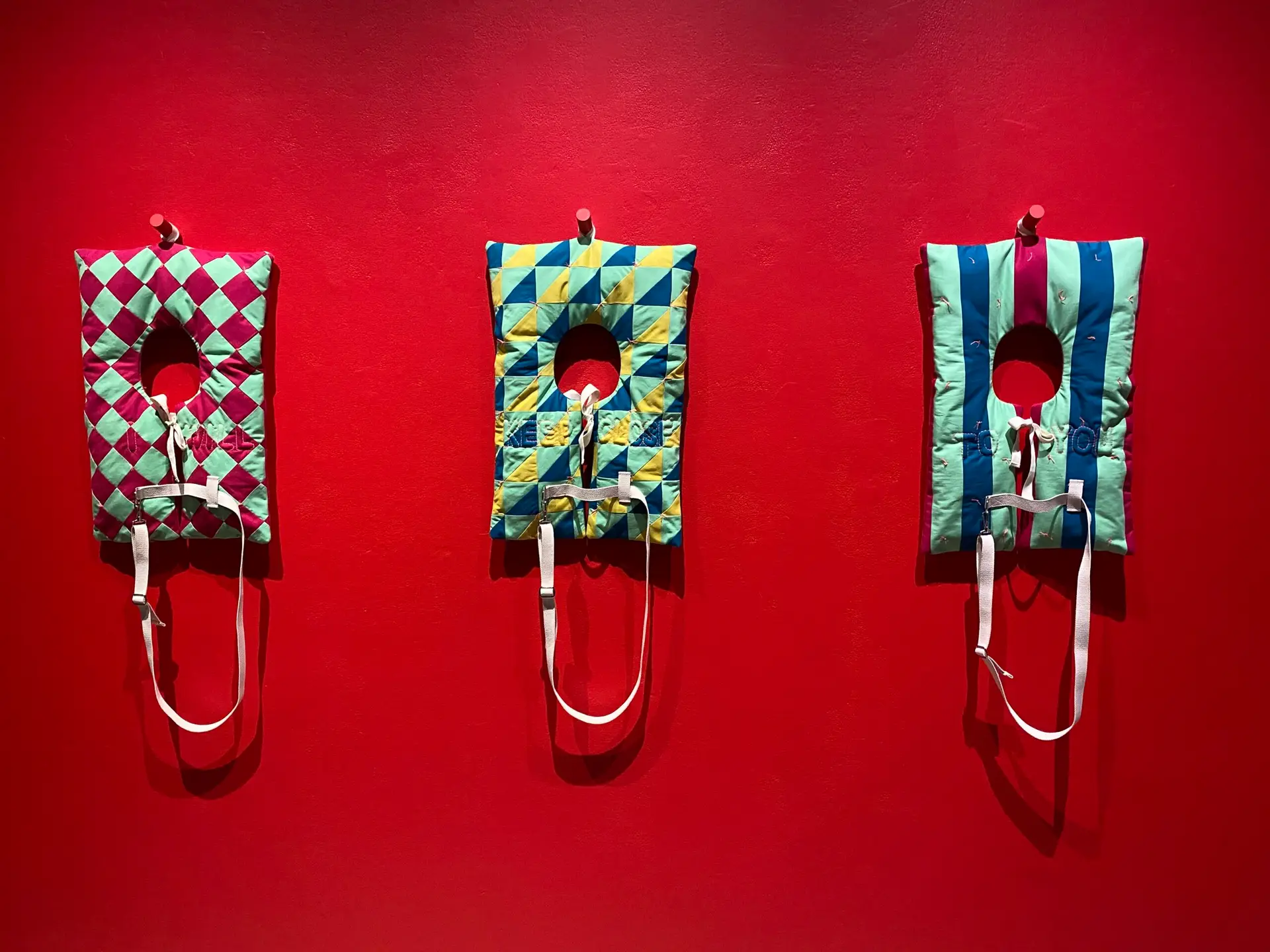
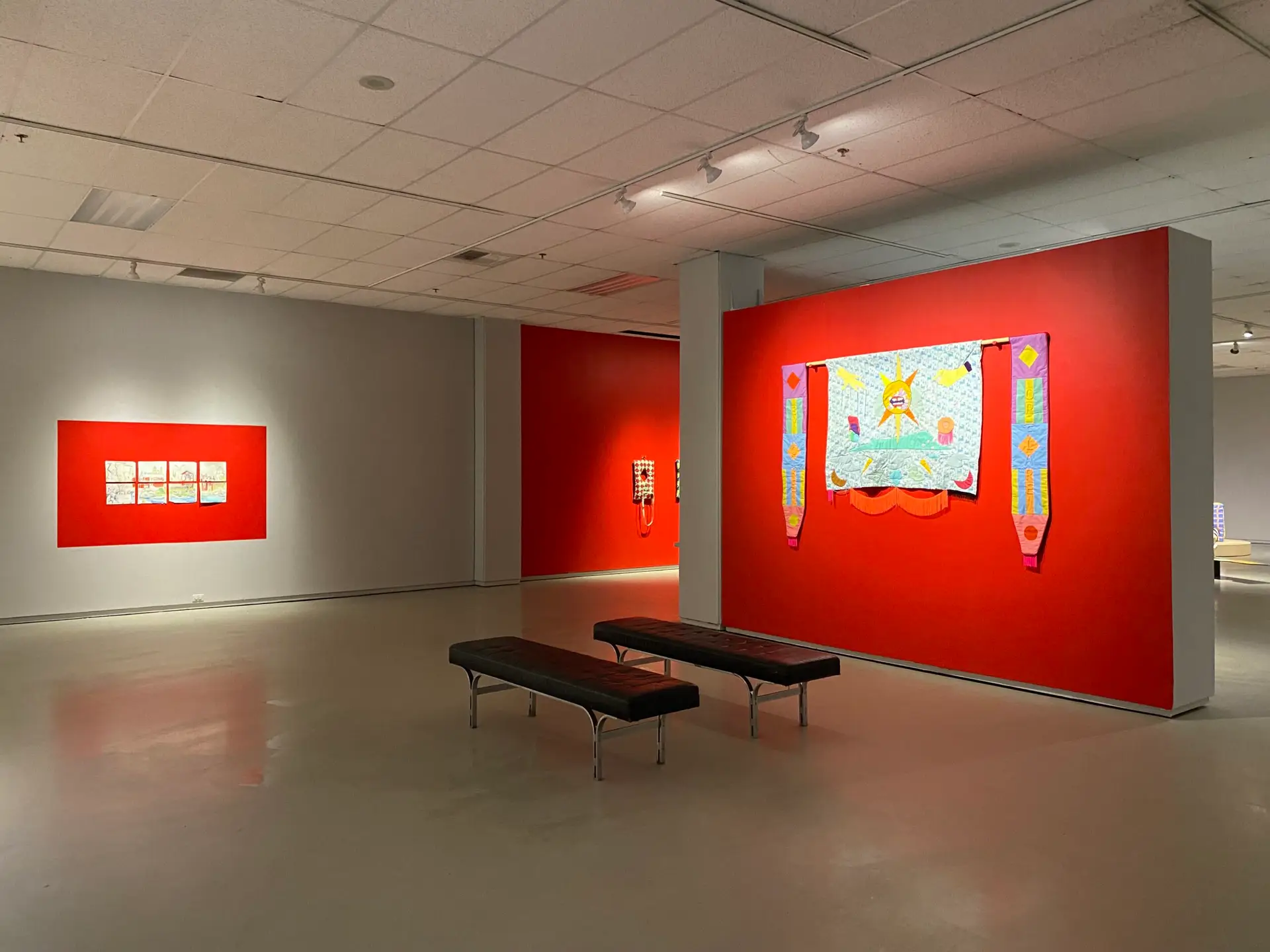
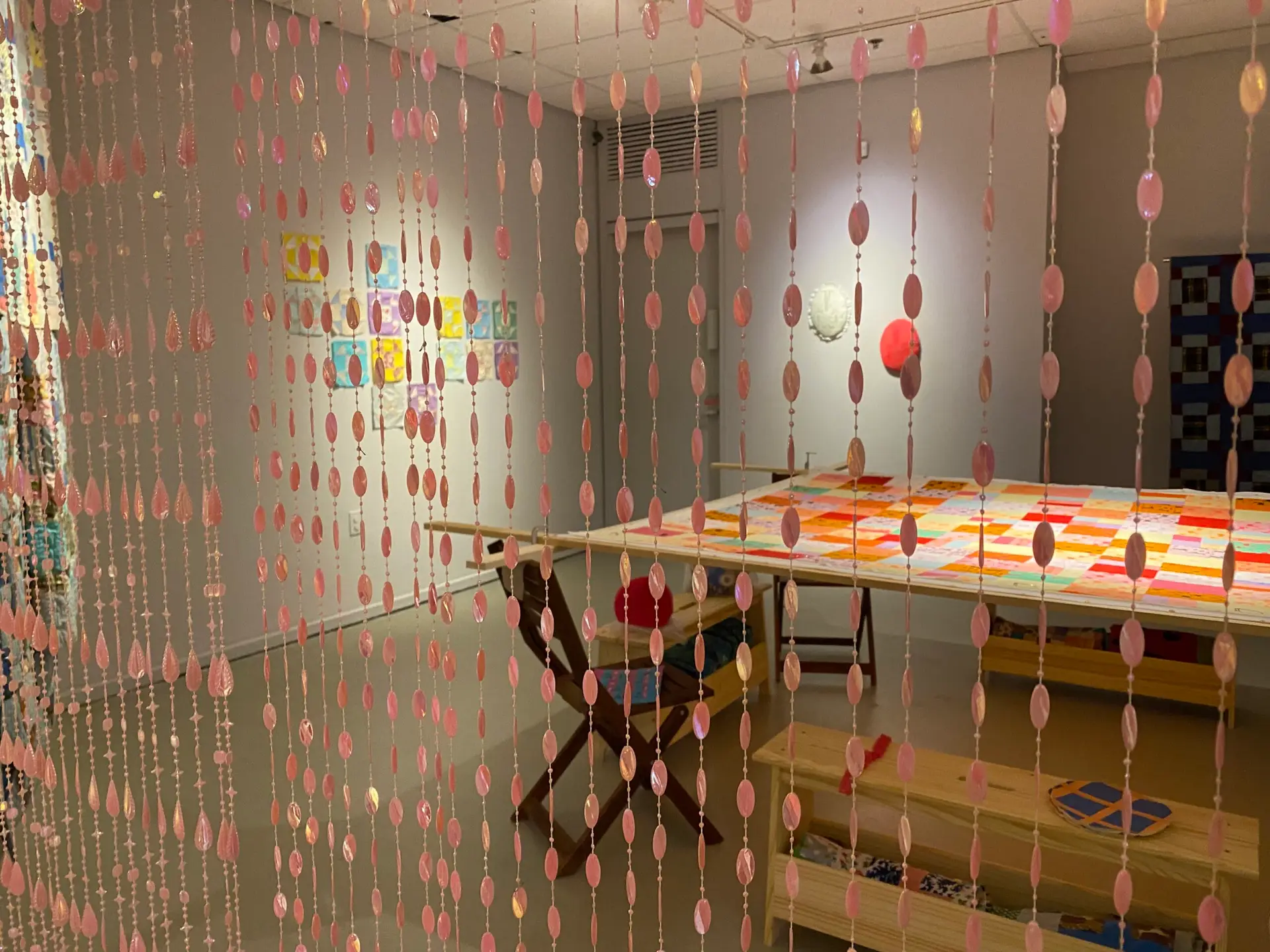
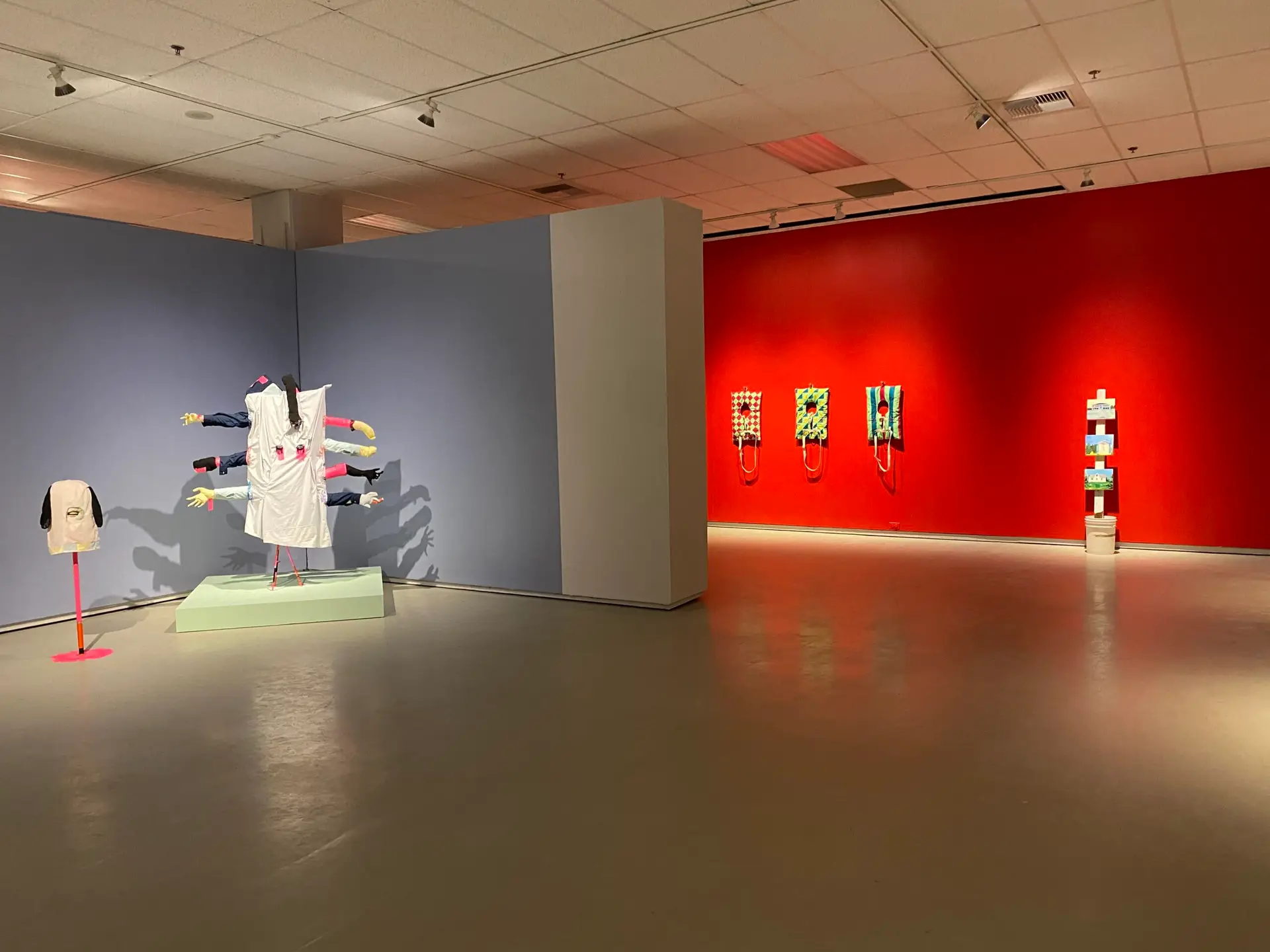
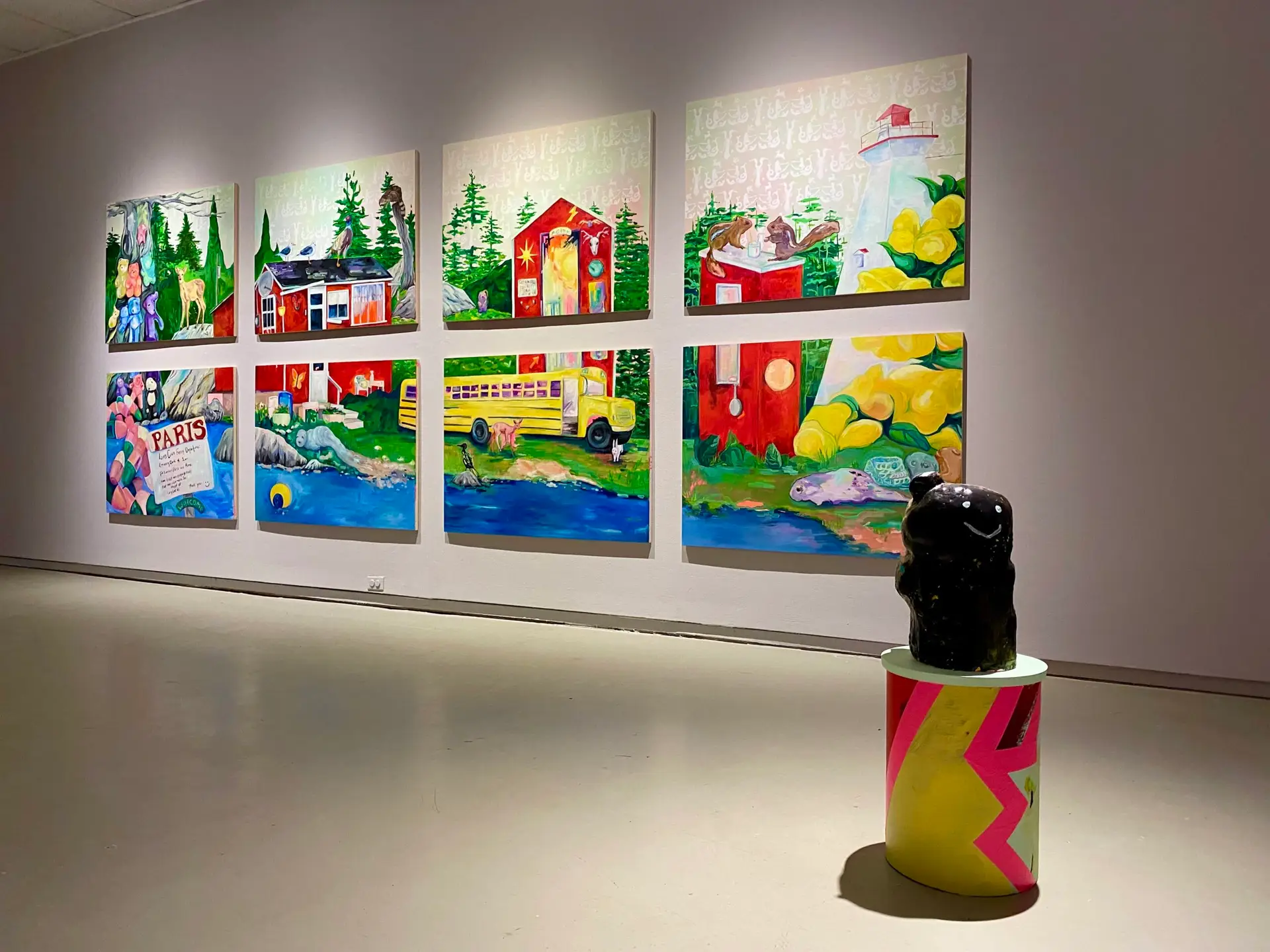
Gallery of exhibition photos courtesy of Saint Mary’s University Art Gallery.
‘The show isn’t about hierarchies, it’s about conversations.’
Hamilton’s large quilted patterned cones, cubes and cylinders were inspired by Maritime signal flags—a system of communication used between ships, i.e. “My position is doubtful”—while navigating work and parenting. “I was having trouble understanding and communicating my own needs and the messages of distress were comforting in their simple requests and simple declarations of distress,” she says. “They felt humourously simple and true to my situation.”
Nickerson was influenced by the strong matriarchal culture of the south shore, where she grew up, “a collection of different, very strong matriarchs who lived within a setting of Shelburne County or Queens County and secretly ran these towns and were often dismissed,” she says. “Instead of talking about the dismissal, it’s more of a complete celebration of their power.”
The celebration of power extends into the traditional tenets of a gallery exhibition—instead of an artist talk, the pair will be hosting quilting circles (the first is February 6 from noon to 3pm). “The show isn’t about hierarchies,”says Nickerson, “it’s about conversations.”
Nickerson started quite the conversation with her students at the show’s opening when she explained that the selfie station they were visiting: A banner featuring a combination of hand-printed fabric and nostalgic textiles surrounds a circular opening at its centre, surrounded by fluorescent pink fringe.
At the exhibition’s opening, she explained that the piece functioned both as an invitation and a provocation—raising questions about visibility, participation, and the performance of self within feminist and communal spaces.
The audience conversations taking place now began as communion, then collaboration, between the two artists.
“There was this beautiful thing that happened as we started to complete work that we were able to make work that responded to each other,” says Hamilton, “and place the work in a way that we felt there was a conversation happening between the pieces.”
What A Sin is on until March 29 at the Saint Mary’s University Art Gallery,
923 Robie Street