

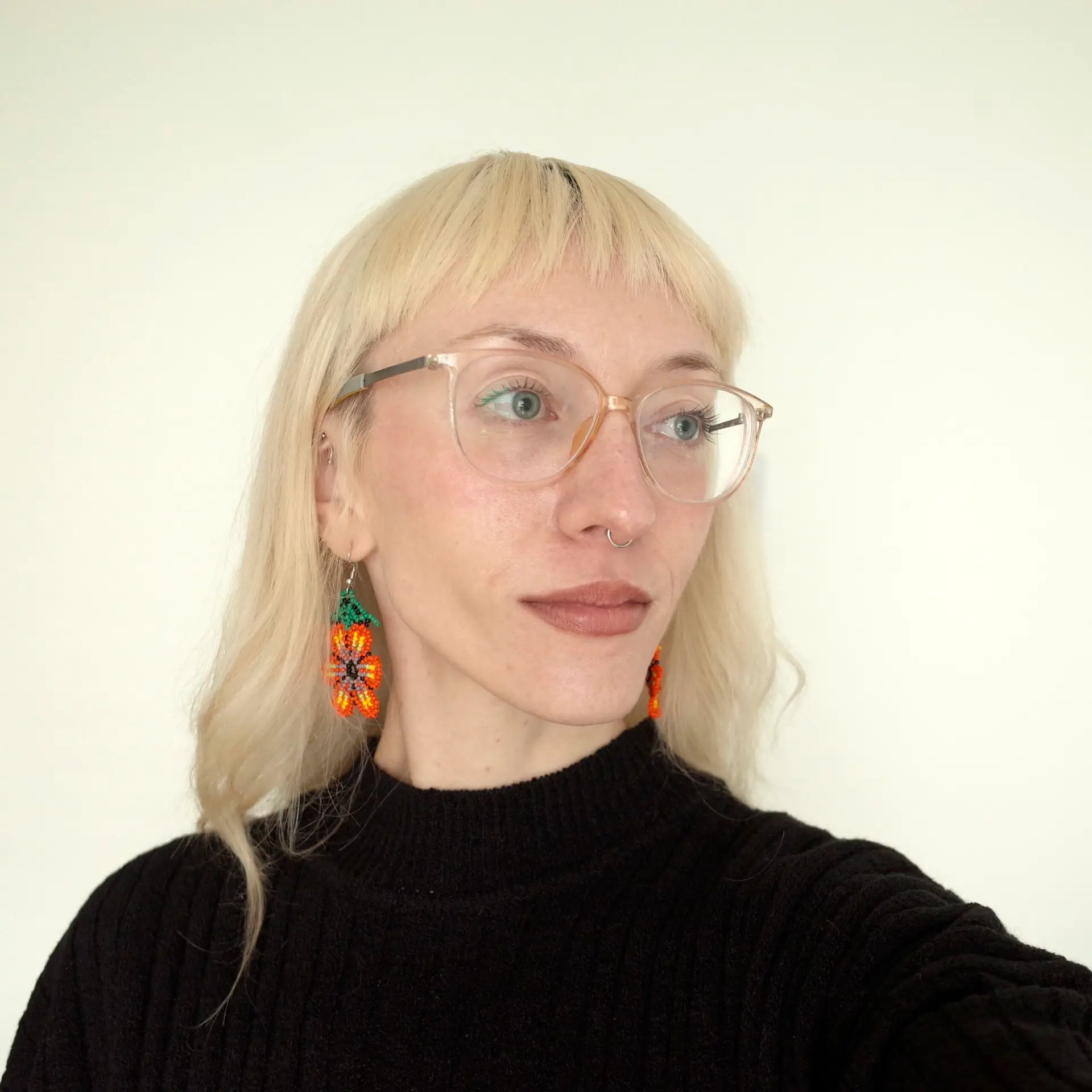
NSCAD University alumna Signy Holm (MAAE 2025) has received the Canadian Association for Curriculum Studies (CACS) ARTS SIG Master’s Thesis Award. Her thesis, Wayfinding Through Waste: A Collective Living Archive of Coast Plastic, transforms marine debris into a site of artistic, educational, and environmental inquiry.
“It took me three years to finish my master’s, and it feels good to get some recognition after all that hard work,” she said. “I feel very honoured and humbled that my work gets to live on in the world, rather than being written and shelved away.”
Originally from Calgary, AB, Holm moved to Halifax in 2022 to pursue her Master of Arts in Art Education (MAAE) degree at NSCAD. Her research project was inspired by her practice of beach combing and walks along the shoreline near Halifax. She would observe objects carried in by the tide, fascinated by the traces of what others left behind.
“In some ways it was kind of like archeology,” she explained. “I would see things like glass and ceramics washed up on the shore, but then I started to notice pieces of plastic coming up more and more. So, I thought, we see plastic on beaches everywhere. Why not treat it as a type of artefact?”
By reframing plastic waste as an archeological object, Holm gives these items a second life—something that carries traces of time and records of human production and consumption.
PARTICIPATORY ARCHIVES AND MULTI-SENSORY RESEARCH
At the heart of Holm’s thesis are two participatory installations, staged at the Anna Leonowens Gallery at NSCAD and the Cape Breton Centre for Craft and Design.
In these installations, visitors were invited to select a piece of marine debris from a shelf of collected items and respond to it using prompts on an archival worksheet. These prompts asked participants to engage multiple senses—touch, smell, sight—and to reflect on their chosen object through writing and drawing.
“Throughout our lives we’re told you’re not supposed to touch garbage, but these objects once had use and function,” Holm said. “I wanted people to pay attention to these objects, using their bodies and their senses to ask themselves, “what knowledge can we take away from these objects?”
The results varied widely. Some participants approached the task with curiosity and care, spending time with the objects and imagining future lives for them. Others responded with humor or discomfort, even refusing certain prompts altogether.
“One participant wrote, ‘I’m not going to smell it,’” Holm said with a laugh.
For Holm, these responses were valuable, as it revealed not only how people interpret material waste, but also how sensory experience shapes emotional and ethical engagement with the environment.
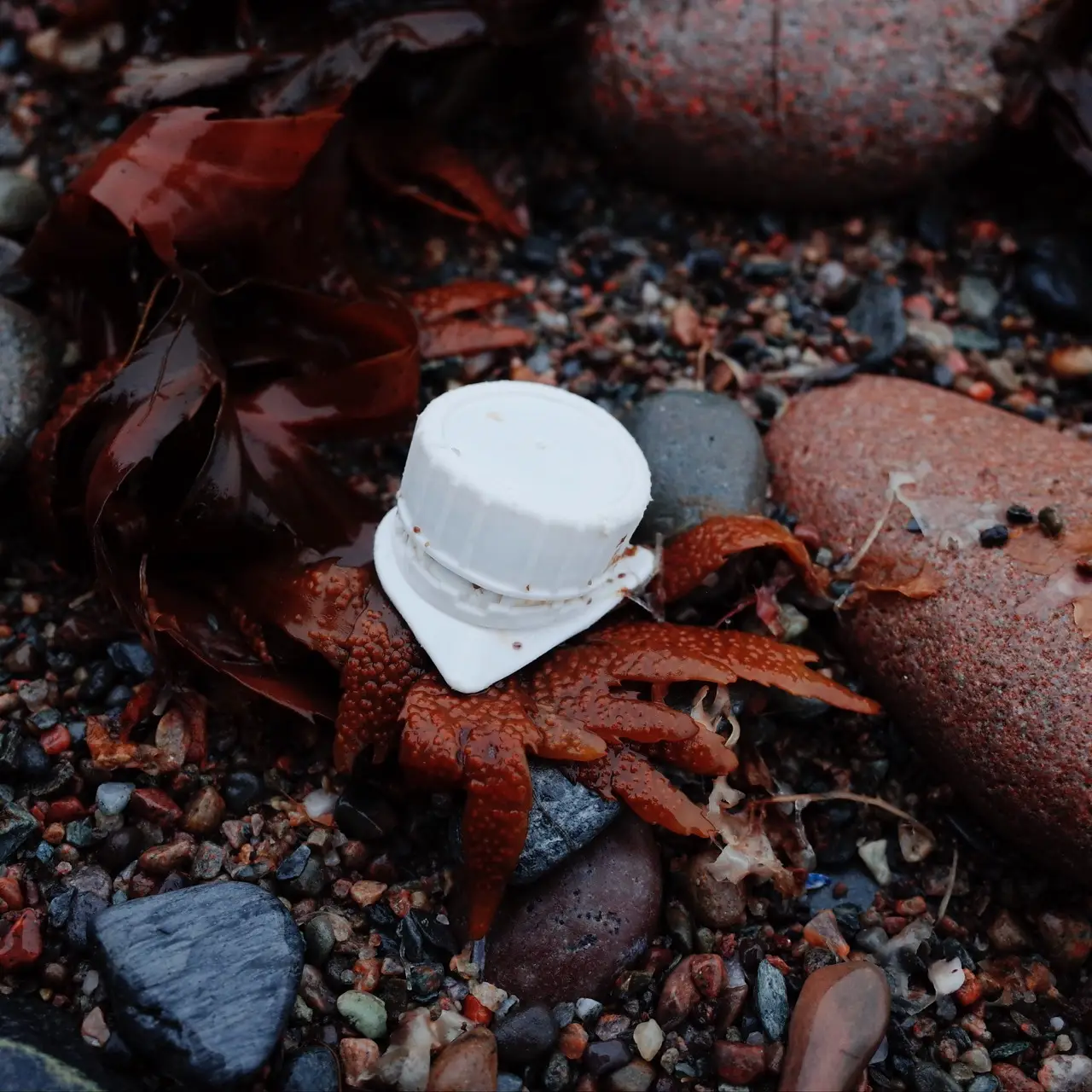
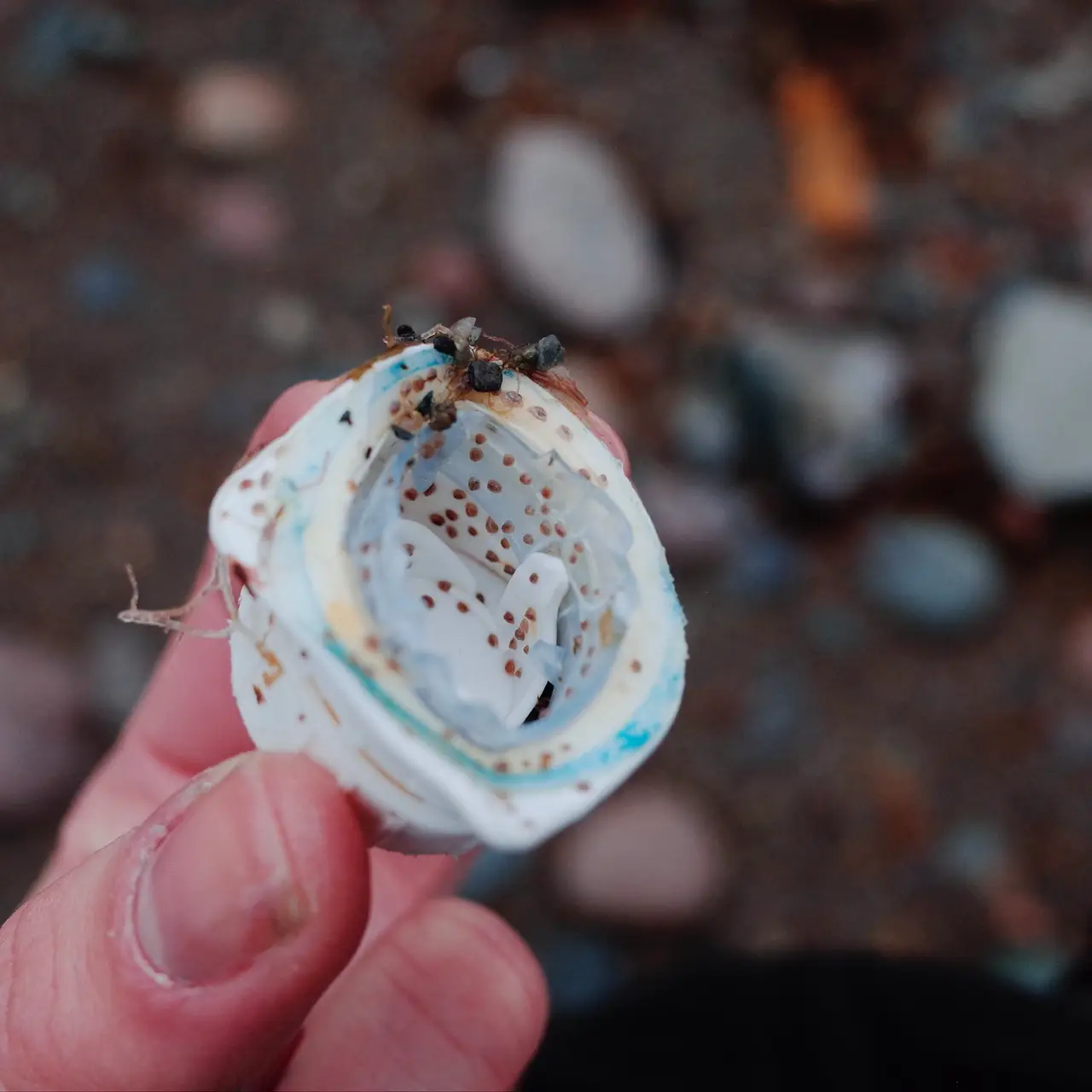
By reframing plastic waste as an archeological object, Holm invites viewers to reflect on their relationship with these objects. | Credit: Signy Holm
FOSTERING A COLLABORATIVE ENVIRONMENT
Holm credited NSCAD’s MAAE faculty members and program as integral to the development of her research.
Her supervisor, Dr. Nicole Lee, Assistant Professor in Art Education, encouraged Holm to apply for the award, pushing her to expand the conceptual scope of the project through an interdisciplinary approach.
“Nicole really pushed me to keep digging,” said Holm. “She wouldn’t take no for an answer and wouldn’t let me settle for something that wasn’t at full potential. She really pushed me to do better, and it paid off.”
Dr. Joshua Schwab-Cartas, Assistant Professor in Art History, played a key role in strengthening her research methodology and citation practices while Tara Mills, Regular Part-Time Faculty, acted as University Examiner and Chair, assisting in shaping early drafts and translating complex ideas into coherent academic writing.
“Working with everyone really just opened the door to art education for me,” she said. “The program really allowed me to explore my own art practice within my research, which helped me expand the possibilities for the thesis.”
Holm also highlighted the importance of NSCAD as an institutional environment, including access to gallery spaces and academic community, allowing her research to extend into public engagement.
“The staff at the Anna Leonowens Gallery were very supportive in allowing me to conduct my research in a collaborative space and spreading the word about the project,” she said. “Having the support of my department and the gallery really took a lot of weight off my shoulders.”
Completing this project has also forced Holm to examine her own relationship with nature and to pay closer attention to the seemingly unimportant objects around her. She hopes her research will extend beyond academia into community and environmental practice.
“I really see potential for this to prompt community initiatives like beach cleanups, public workshops, and educational programming,” she said. “But I think this will also open up conversations about archives and how plastic objects might fit into archeological studies in the future.”