

At St. Catherine’s Elementary, transformation didn’t begin with a grand plan. It began with a question.
“The school was built in 1956… it’s got great bones, but it looks a little weary at times,” said Principal Stephen Driscoll. “People don’t always know where the front door is—it’s just not obvious. So, we asked: how can we dress this place up and make it more inviting?”
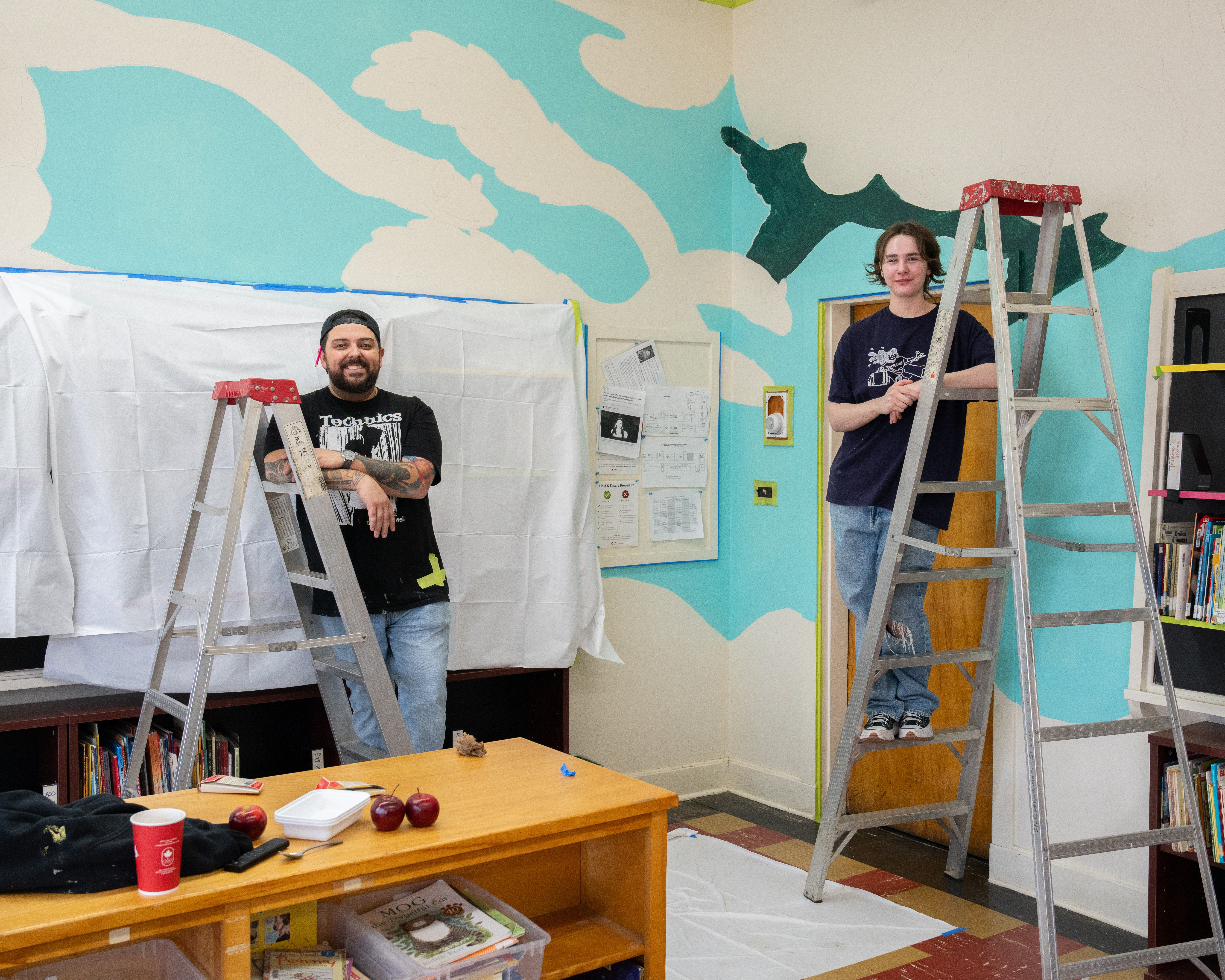
That question led to a collaboration with NSCAD University, bringing students into the school not just as artists, but as listeners. Before a single brush touched the wall, the process started with conversation.
“We treat the kids in the school as knowledge keepers, which doesn’t happen enough in primary school,” said Jordan Bennett, Associate Professor in the Division of Media Arts, who led the project.
NSCAD students spent the day meeting nearly a hundred children, gathering ideas, sketches, and impressions of what their school could be. What emerged from those conversations was not a single directive, but a shared sense of imagination. One phrase in particular stood out.
“One of the students said, ‘a sea of knowledge,’ and we were just like, oh wow—that’s cool,” Bennett recalled.
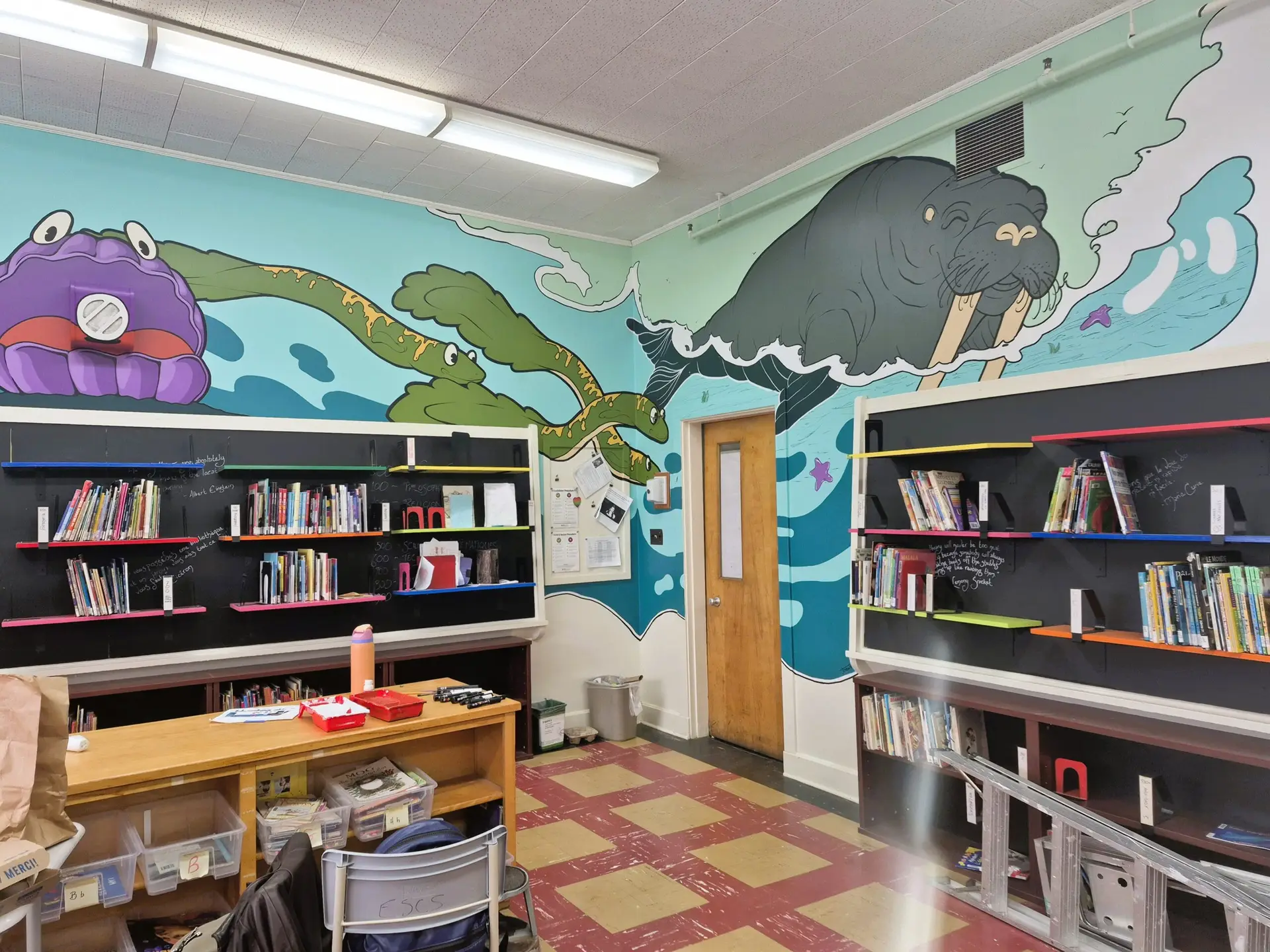
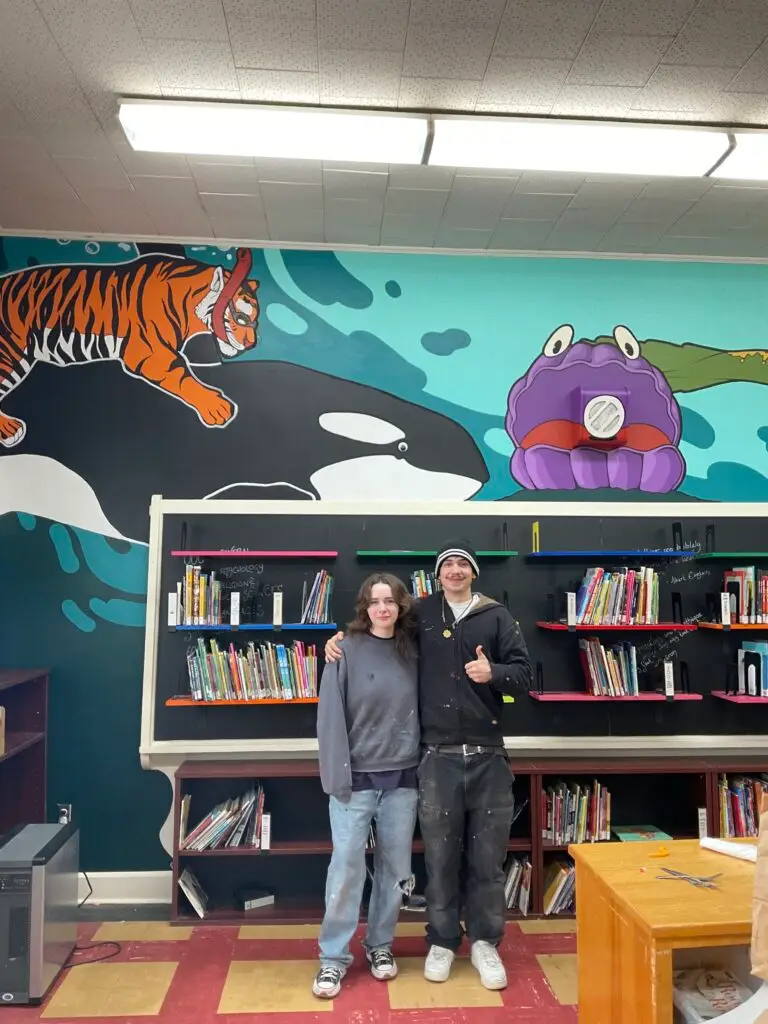
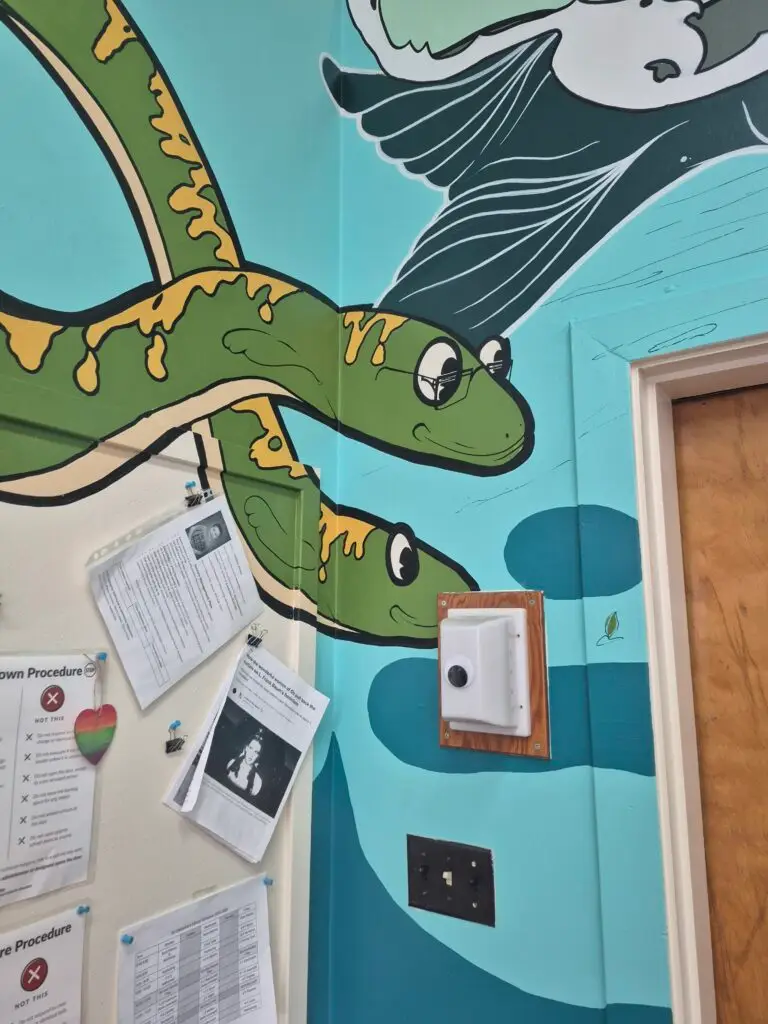
That idea became the foundation for the library mural: a vibrant underwater world where learning takes shape through sea creatures, colour, and movement. The concept was developed collectively, with students taking ownership of both the imagery and the storytelling.
“The students really took it upon themselves to not only design the art, but create this narrative for their space,” Bennett said.
A NEW APPROACH TO ART MAKING
For the NSCAD students involved, working directly with children reshaped how they think about art making. Second-year student Nicholas Alfoldy described the process as both unfamiliar and deeply meaningful.
“It was so beautiful. It was really special,” he said. “They were so freeing with what they would draw.”
That sense of freedom carried through to the final work. What began as uncertainty gradually became confidence as the mural took shape.
“We all sort of felt this nervousness… we didn’t really know what to anticipate,” he said. “But it really blossomed into this incredible environment for the kids.”
For Alfoldy, murals hold a particular kind of weight.
“It’s the thought of it staying and being almost immortalized for people to see,” he said. “It made me feel very excited to be doing this mural.”
That permanence was balanced by a sense of responsibility to the students who inspired the work, both now and in the future.
Third-year student Charlotte Trudeau also entered the project with limited experience working in this kind of collaborative, community-driven way.
“I haven’t really done anything like that before,” she said. “But it went a lot better than I was expecting.”
Like her peers, Trudeau emphasized the importance of listening.
“It was great to hear all of their ideas and opinions about their school,” she said. “Being able to distill that into a mural is a pretty good feeling.”
For her, the value of murals lies in their ability to change how people experience a space.
“Murals can really revitalize a space and make it more enjoyable to be in,” Trudeau said. “If you can make the experience even a bit better, that’s really important and valuable.”
GIVING STUDENTS A SENSE OF OWNERSHIP
Back in the school, that transformation is already visible. Without a formal unveiling, students simply began encountering the space as part of their regular routine.
“All I hear is ‘wow, wow, wow’—the kids are just so excited,” Driscoll said.
The decision to avoid a ceremonial reveal was intentional.
“We didn’t do any grand opening—we just let the kids experience it,” he said.
For Bennett, that sense of ownership is central to the work.
“Put yourself in the shoes of these kids and think about what would make it special for you,” he said. “The space now belongs to the students who helped imagine it. This is now your library.”
The project also points forward. Because the school’s mascot is the tiger, plans are underway for an exterior tiger-themed mural that will make the entrance more visible and welcoming.
For Driscoll, the long-term impact of collaborative art projects like this one has the potential to ripple outward.
“Students will be inspired… you can take a blank space and bring it to life,” he said. “That type of connection will have a tremendous feeling for the community.”
For everyone involved, the transformation of the space reflects something larger: a shared act of imagination, shaped by many voices, and made visible on the walls.